People of ICEBERG: Cassandre Jeannot and Melanie Mobley
Throughout the ICEBERG project, we will introduce the people working on the project. In this personal introduction, Cassandre Jeannot from Oniris and Melanie Mobley from INRAE introduce themselves and share what inspires them about ICEBERG.
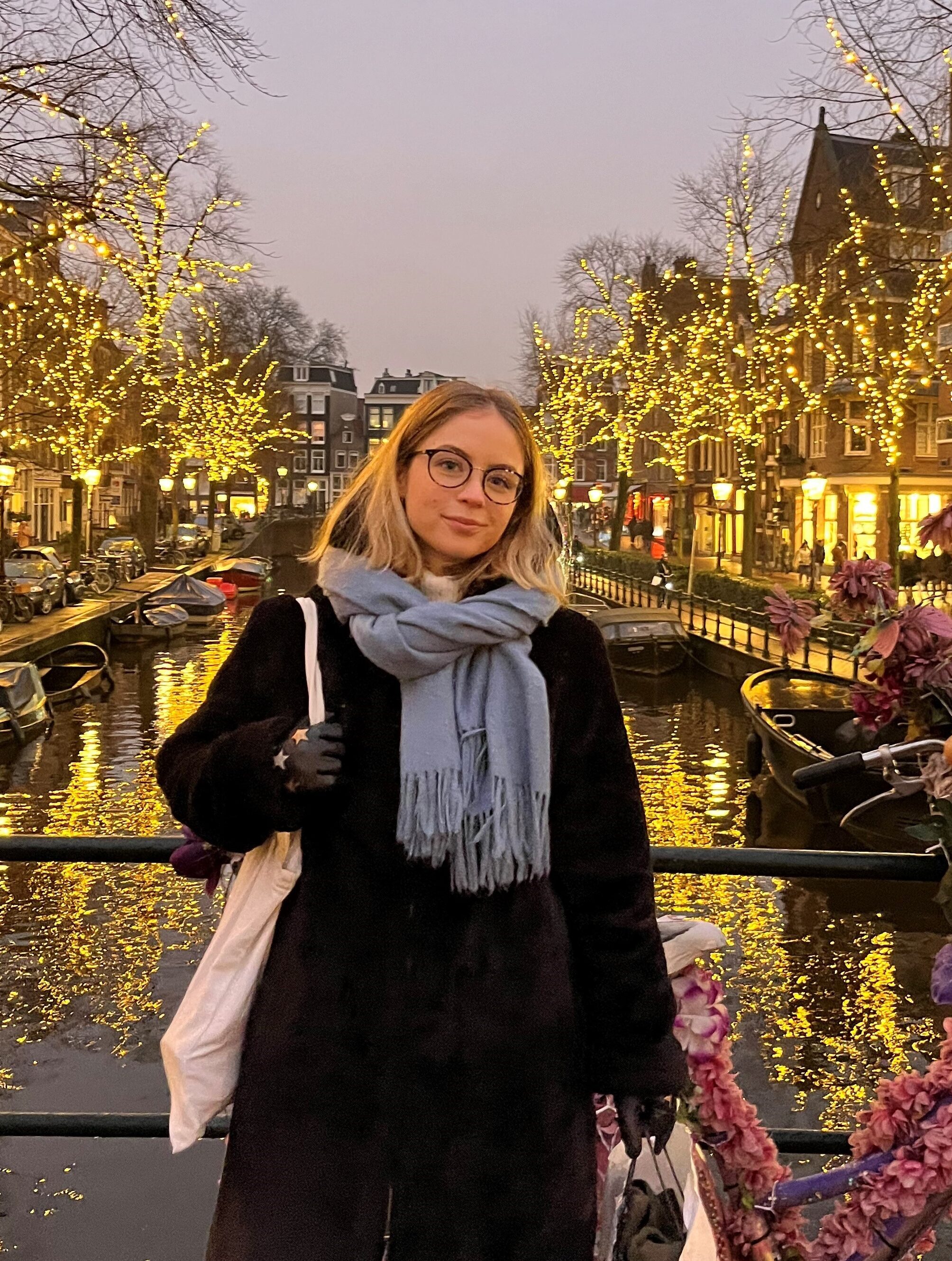
Hi! I’m Cassandre Jeannot, a post-doctoral researcher at the LABERCA research unit, Oniris. Within the ICEBERG project, I work in Work Package 2, where I mainly contribute to the analysis of food samples. My work in WP2 includes applying innovative analytical strategies to investigate both historical pollutants, which have been monitored for many years, and emerging contaminants, which are newer, less studied, or not routinely searched for.
In ICEBERG, my research focuses on assessing human exposure to chemical hazards, particularly environmental contaminants, through food consumption. The project gives me the opportunity to extend my previous work to populations living in very different environments, with different dietary habits and exposure patterns. Additionally, I can focus on food products that I have not previously had the opportunity to analyse.
During my PhD, I worked on the development and application of broad-spectrum analytical methods to detect a wide range of chemical contaminants in different types of food samples. This experience in environmental monitoring and food safety is particularly relevant to ICEBERG, as it allows me to contribute my expertise in detecting both known and less expected chemical pollutants.
By analysing food samples and combining these results with information on the diets of the populations studied, we can better understand which contaminants people may be exposed to through their food. Ultimately, this work will help identify potential chemical exposure risks and contribute to evidence-based public health recommendations.
I joined the ICEBERG project because it provides a unique opportunity to study the combined effects of climate change and chemical pollution on human populations. What I find particularly interesting is that the project does not consider these factors separately, but looks at how environmental, climatic, and societal factors can interact and influence exposure and health.
For me, the most interesting aspect of this project is precisely this interdisciplinary approach: combining expertise from different fields to address complex global challenges. It also allows me to apply my analytical chemistry expertise to real-world questions, by helping to establish the link between environmental pollution, food contamination, and human exposure.
I hope to learn more about chemical contamination in Arctic food and the specific exposure patterns of local populations, particularly through foods that I have not previously had the opportunity to study. I am also looking forward to learning from the other disciplines involved in ICEBERG and gaining a better understanding of how environment, food, climate change, and human exposure are connected.
“The most interesting aspect of this project is precisely the interdisciplinary approach: combining expertise from different fields to address complex global challenges.“
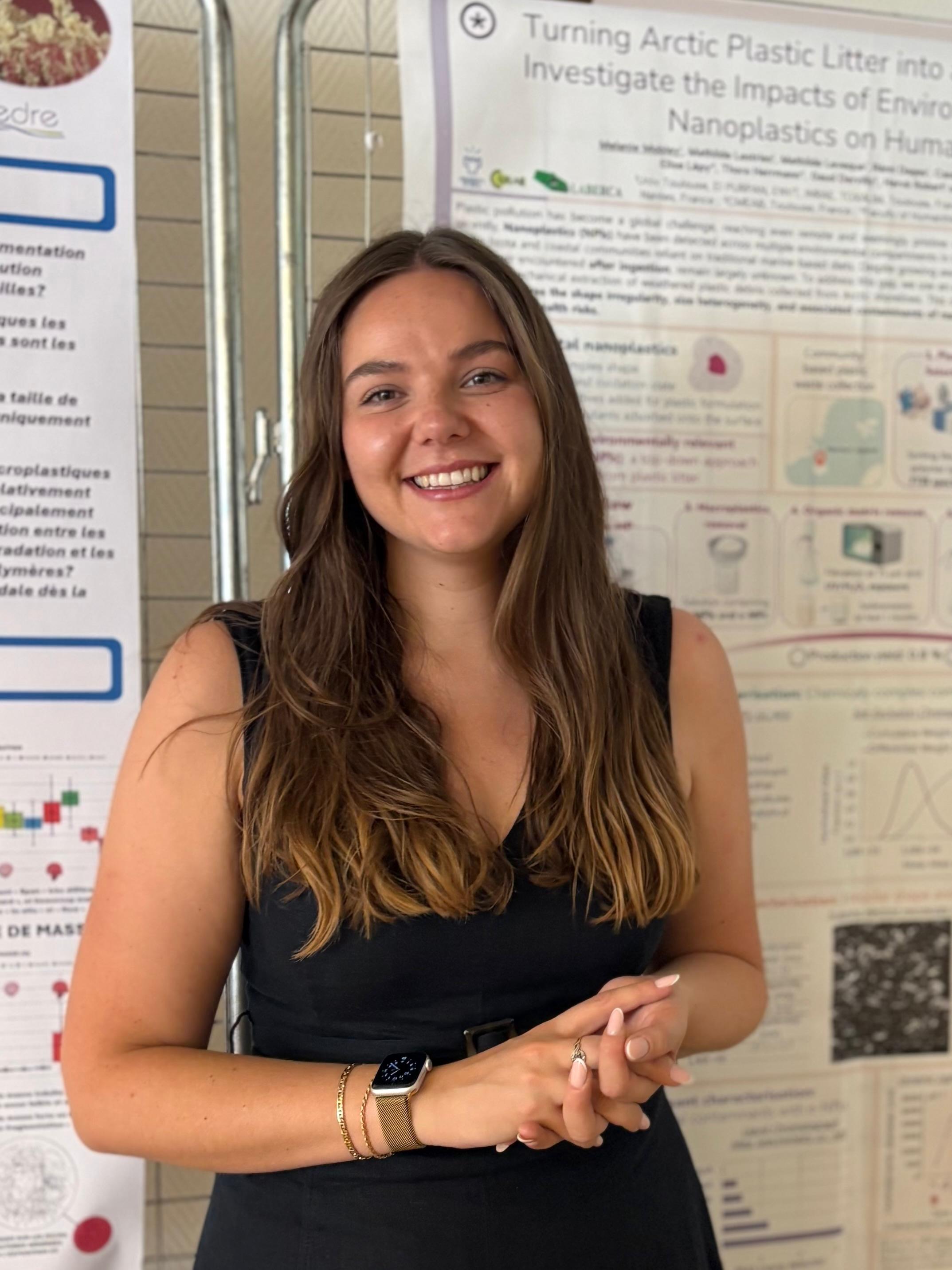
Hi! I’m Melanie Mobley, a PhD researcher at Toxalim in Toulouse. Within the ICEBERG project, I contribute to WP2 in the French National Research Institute for Agriculture, Food and Environment (INRAE). My work focuses on environmentally relevant nanoplastics and their potential effects on human digestive health. My research sits at the interface between environmental science and toxicology, with the aim of understanding what happens when environmental plastic debrisfragments into very small particles that may be consumed by humans through the food chain.
One of the particularities of my PhD is that instead of working with commercially produced nanoplastics, I work with nanoplastics produced from weathered plastic debris collected entirely through community beach clean-ups near Akureyri. A part of my work has then been dedicated to turning these weathered plastic fragments into environmentally relevant nanoplastics and characterising them.
After sorting and identifying the polymers, the plastic debris is processed in the laboratory to generate nanoplastic particles, which are then analysed for their size, morphology and chemical composition.
These particles are much more heterogeneous than commercial nanoplastics and can also carry a complex mixture of chemicals, including additives incorporated during plastic production and environmental contaminants. This makes them more complex, but also more representative of what people and ecosystems may actually encounter.
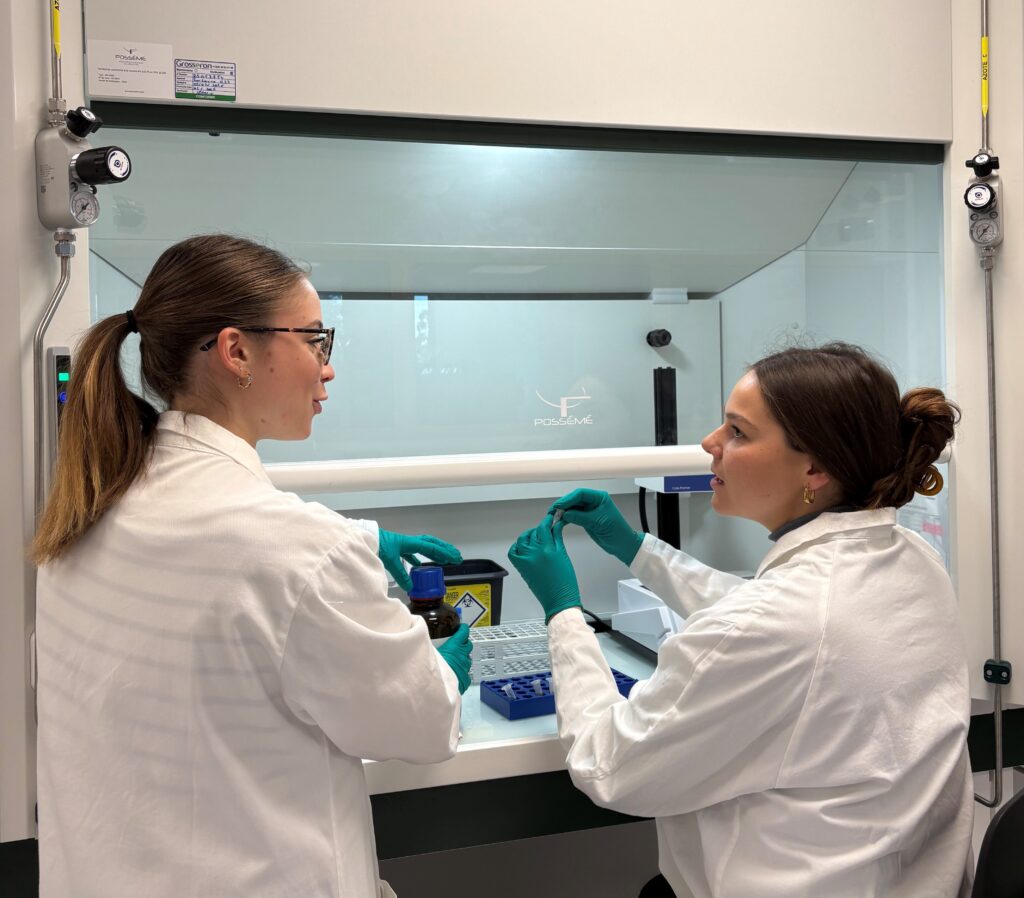
This is also where my collaboration with Cassandre and the LABERCA team comes in. Together, we are investigating which organic contaminants may be associated with these particles, including several families of legacy and emerging pollutants. This helps us better understand whether nanoplastics may act not only as particles themselves, but also as carriers of other chemical contaminants.
The next step is to study what happens after the nanoplastics are ingested. I use a human gastrointestinal digestion protocol simulated in vitro to reproduce the conditions that nanoplastics encounter in the mouth, stomach and intestine. During digestion, the particles can change: proteins like digestive enzymes and other molecules may adsorb onto their surface, and the particles may aggregate or disperse differently.
These transformations are important because they can influence how nanoplastics and associated contaminants interact with intestinal cells. I then use human intestinal cell models to investigate whether these gastrointestinally digested or non-digested nanoplastics affect the intestinal barrier.
Participating in fieldwork in Iceland and seeing plastic pollution first-hand in remote coastal environments gave an additional dimension to my research, reinforcing the importance of linking environmental contamination with questions of exposure and health. This is especially true in regions that may be geographically remote but are far from isolated from global pollution.
Local populations there may be disproportionately affected, as contaminants accumulate in Arctic food webs and people are exposed to them through traditional diets. Climate change adds a further layer, as it influences how contaminants are transported, distributed and made available.
“As early-career researchers, we are also very excited to work within such a multidisciplinary and international team."
What I find especially interesting about ICEBERG is that it allows us to follow pollution across several scales: from plastic debris in the environment, to associated chemical contaminants and potential biological effects. Working with researchers from analytical chemistry, environmental sciences and toxicology makes it possible to connect these different pieces of the story. I also really value the connection between the scientific work and the Arctic context.