People of ICEBERG—Ana Faria from AIR Centre
Throughout ICEBERG, we will introduce people working on the project. In this personnel introduction, Ana Faria from AIR Centre introduces herself and shares what inspires her about ICEBERG.

Throughout ICEBERG, we will introduce people working on the project. In this personnel introduction, Ana Faria from AIR Centre introduces herself and shares what inspires her about ICEBERG.
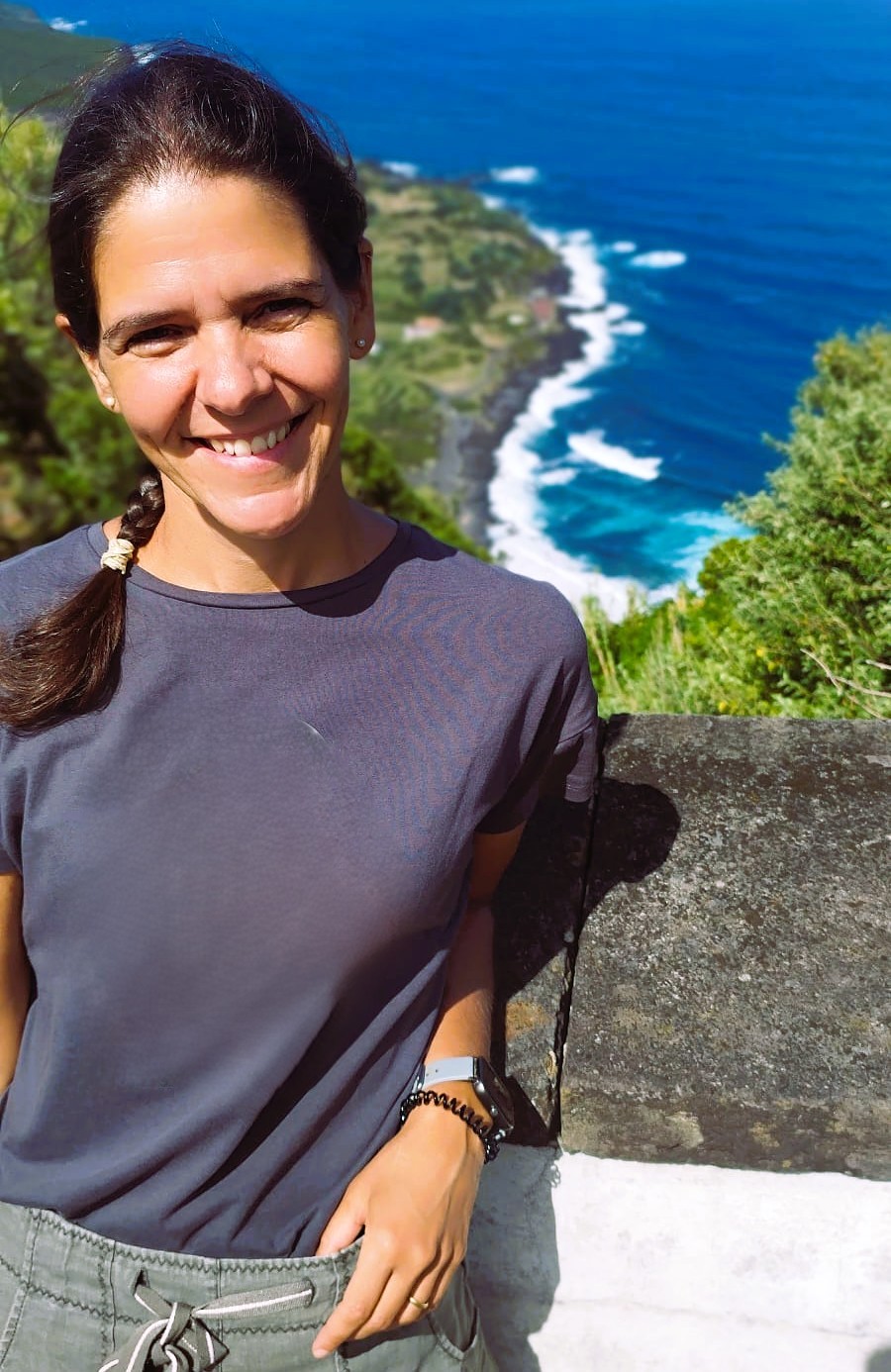
Ana Faria works at the science–policy interface for Arctic ocean governance.
Hi! I’m Ana Faria — a marine biologist and ecologist with a strong background in studying the effects of human-induced stressors on marine environments and species.
Despite my strong connection with fundamental research and academia, I recently embraced a new challenge by joining the Ocean Policy & Stakeholder Engagement Group at the Atlantic International Research Centre (AIR Centre). What a journey it has been! Moving from field and laboratory work to engaging in science-to-policy processes has been both demanding and deeply rewarding.
As part of this new chapter, I became involved in the ICEBERG Project. I joined a year after it started, but I immediately knew I wanted to contribute. The project’s interdisciplinary nature and its focus on the impacts of pollution in one of the most remote regions of the planet attracted my attention right away.
While my academic background is rooted in marine and experimental biology, my role in ICEBERG is somewhat different. I work on governance approaches, translating scientific findings into actionable recommendations for EU Arctic Policy (WP3). I’ve been involved in drafting policy papers and recommendations, with a particular focus on frameworks for Arctic beach clean-ups. This work has been an incredible learning experience—enriched by the insights and field expertise of my colleagues. There’s so much more complexity behind beach clean-ups than most people might imagine!
Over the past year, I’ve gained invaluable knowledge—not only about governance assessments and science-to-policy translation, but also about the far-reaching impacts of pollution on Arctic ecosystems and local communities. The situation is indeed concerning, but the collaborative work being done, especially alongside local communities, gives me real hope for the future.
"Without strong, science-informed policies, even the best research can fail to drive real change.”
Working on policy-related issues has shown me how crucial it is to connect scientific evidence with decision-making. Policies are what ultimately shape conservation efforts, guide resource management, and determine how societies respond to environmental challenges. Without strong, science-informed policies, even the best research can fail to drive real change. Bridging this gap between knowledge and action is essential if we want to ensure a sustainable and resilient future for our oceans—and for the people who depend on them.
To stay tuned on ICEBERG, follow us on social media and subscribe to our newsletter to get the updates to your own email.
Get to know more ICEBERG people:
Find ICEBERG on:
Subscribe to our newsletter and stay updated on the progress of the project.
SubscribeProf. Thora Herrmann
University of Oulu
thora.herrmann@oulu.fi
Dr Élise Lépy
University of Oulu
elise.lepy@oulu.fi
Marika Ahonen
Kaskas
marika.ahonen@kaskas.fi

Innovative Community Engagement for Building Effective Resilience and Arctic Ocean Pollution-control Governance in the Context of Climate Change

ICEBERG has received funding from the European Union's Horizon Europe Research and innovation funding programme under grant agreement No 101135130


