May 12 2026

From the Arctic to Japan: ICEBERG Shapes the Future of Beach Litter Monitoring

As marine pollution continues to affect coastlines around the world, the question of how to monitor beach litter more effectively is becoming increasingly important. This is where the remote sensing work being carried out in ICEBERG comes in. Now ICEBERG’s remote sensing methods are featured in Japan, as the local Ministry of the Environment published guidelines on marine litter monitoring.

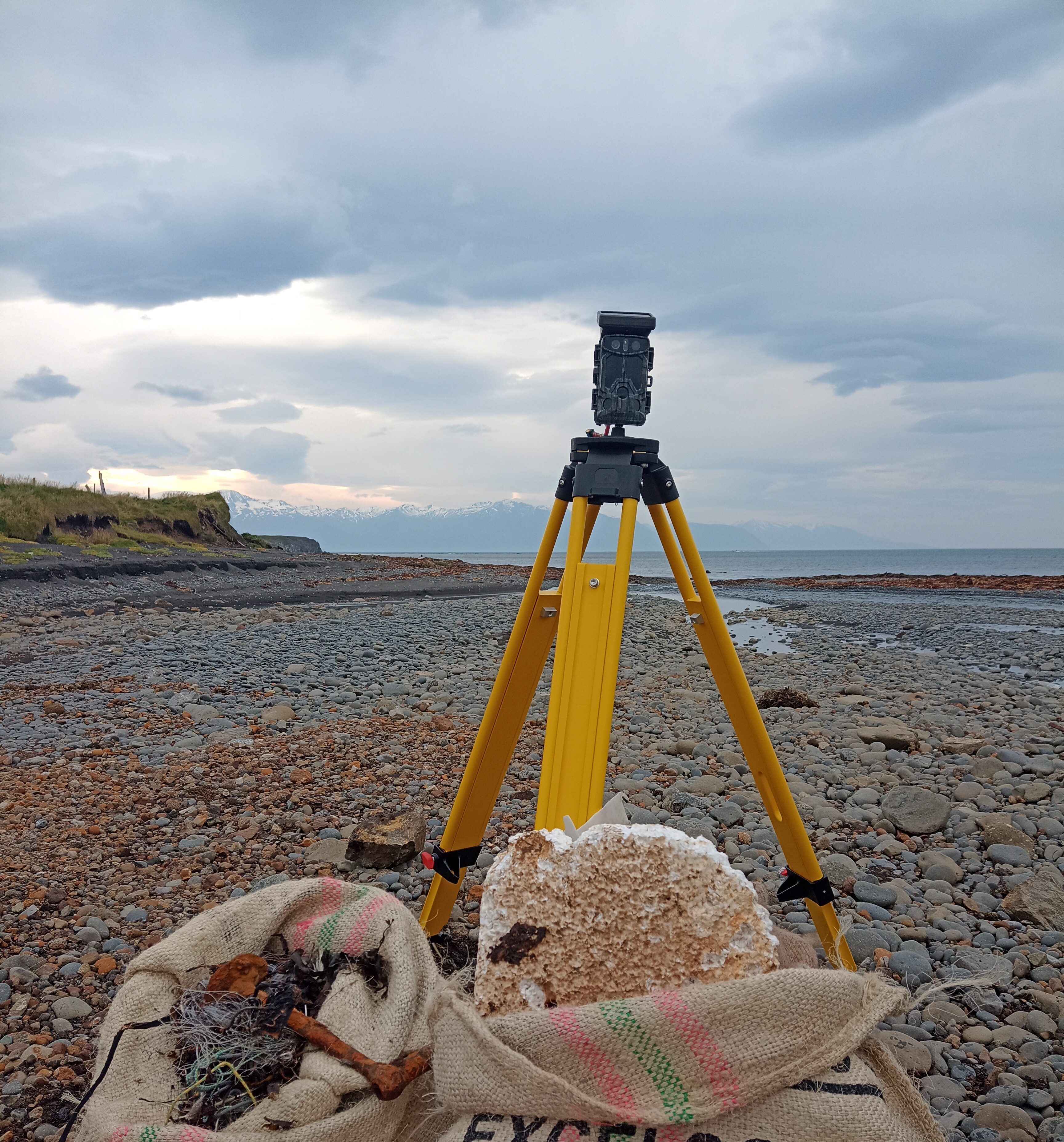
A small, black camera on a bright yellow stand, on a rocky beach. In the background is a gloomy and cloudy landscape.

Time-lapse cameras are used to map litter at coastal areas. Photo: Victor Lion

The publication published in March, titled “Guidelines for Harmonizing Marine Litter Monitoring Methods Using Remote Sensing Technologies”, features the ICEBERG project’s use of timelapse cameras, citizen science and AI-powered image analysis as a case study.

Natascha Oppelt is a Full Professor for Physical Geography at Kiel University, in the northernmost parts of Germany. In ICEBERG, she works with remote sensing, and has been involved in the process of the project being included in the guidelines.

She visited Tokyo in the fall of 2025 to share ICEBERG’s approach, methods and results with experts from JANUS, the company responsible for updating the national guidelines for litter monitoring in Japan. They identified ICEBERG as a suited case to present as part of the updated guidelines as they were reviewing ongoing projects in the EU.

Remote sensing

One of the main reasons ICEBERG was chosen as a case study is the novel way that time-lapse cameras are used in the project. Time-lapse cameras capture images at set intervals over longer periods of time, and the pictures can be combined to make a video. In ICEBERG, the cameras are used to map litter, like plastic or fishing nets, on the beaches of Iceland and Svalbard.

The images are analyzed using AI to automatically detect, classify and quantify marine litter and track how it changes over time. Time-lapse cameras are more accessible than other forms of remote sensing technology, as they are fairly cheap, easy to use, and can be used to complement the use of drones.

“Coastal areas are often difficult to access, making remote sensing an especially valuable tool for long-term observation. It also enables us to raise awareness among the general public about how coastal areas and beaches are changing”, Natascha says.

"Being included in the national guidelines of a country on the other side of the globe shows how impactful the work being done in ICEBERG really is."
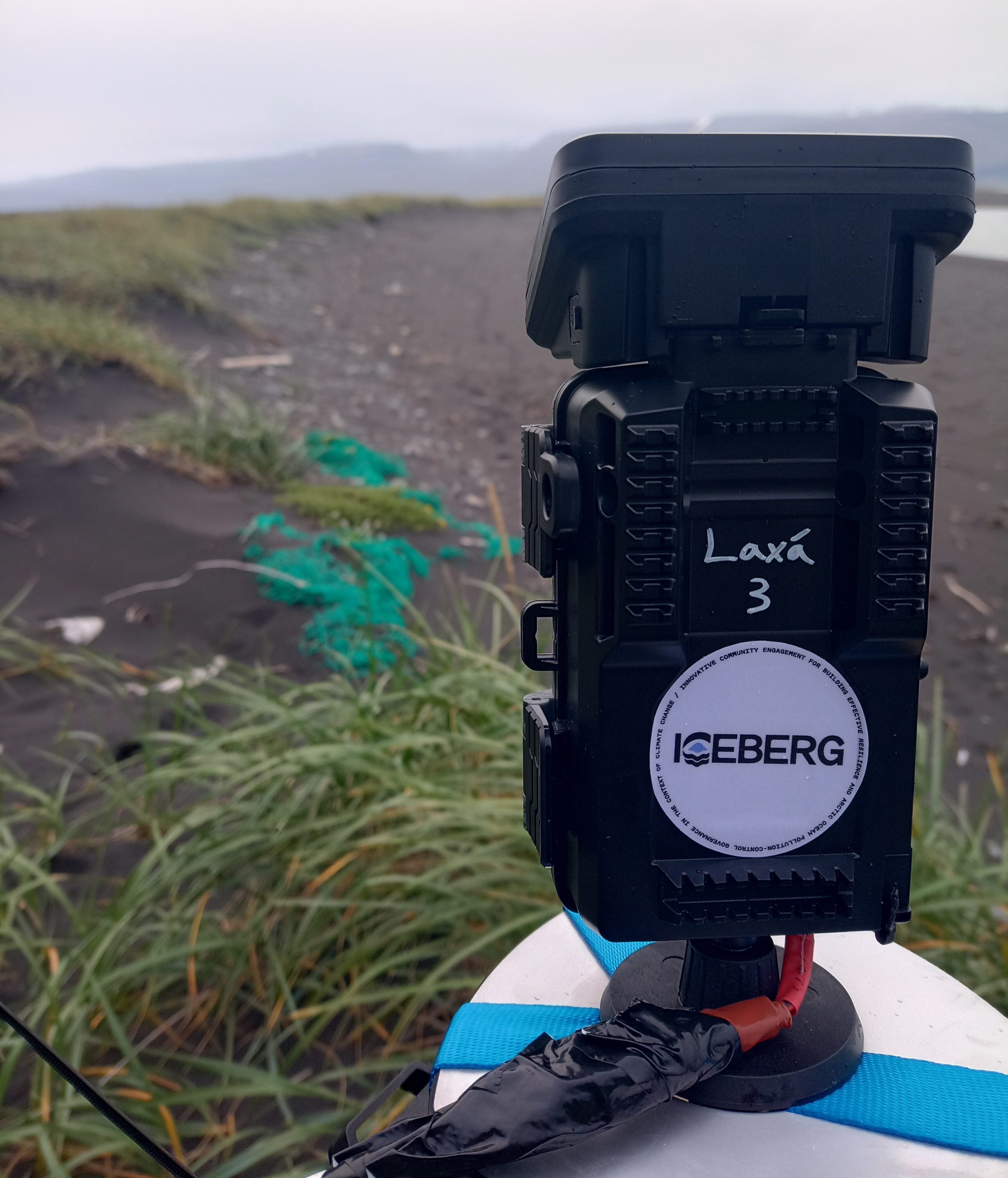
Close up image of a black time-lapse camera with a light purple sticker with the ICEBERG project logo on it. In the background, a gloomy beach landscape.

Remote sensing tools can be used raise awareness among the general public about how coastal areas are changing. Photo: Victor Lion.

Impact beyond the Arctic

The guidelines provide public actors with an overview of suitable methods for addressing different types of pollution. Through new, cost-effective tools and ideas, such as the use of time-lapse cameras, monitoring can become more accessible. Given Japan’s extensive coastline, this collaboration helps to amplify the impact of ICEBERG’s research beyond the Arctic.

“Being included in the national guidelines of a country on the other side of the globe shows how impactful the work being done in ICEBERG really is”, says Oppelt.

Better methods lead to better data, and better data is essential for informed action against pollution. By combining automated image acquisition with AI-supported analysis and local engagement, ICEBERG helps generate the kind of consistent, high-quality data that future monitoring frameworks need.

If you’re interested in hearing more about how time-lapse cameras are being utilized in the ICEBERG project, read Natascha’s blog post from June 2025 here!

Stay tuned for more

Stay tuned on ICEBERG by subscribing to our newsletter and following us on social media:

LinkedIn
Facebook
Instagram

Subscribe to our newsletter and stay updated on the progress of the project.

Subscribe

Project Scientific Coordinator

Prof. Thora Herrmann
University of Oulu
thora.herrmann@oulu.fi

Co-coordinator, Project Manager

Dr Élise Lépy
University of Oulu
elise.lepy@oulu.fi

Communications

Marika Ahonen
Kaskas
marika.ahonen@kaskas.fi

Innovative Community Engagement for Building Effective Resilience and Arctic Ocean Pollution-control Governance in the Context of Climate Change

ICEBERG has received funding from the European Union's Horizon Europe Research and innovation funding programme under grant agreement No 101135130

Privacy Policy