December 2 2025

From Fjords to the Lab: Turning Beach Plastics into a Health Research Asset

Among the rugged beaches of Eyjafjörður in northern Iceland, Melanie Mobley collected plastic debris shaped by years of sun, wind, and waves. Back at the TOXALIM Research Centre in Toulouse, she transforms these worn fragments into nanoplastics to study their potential effects on human health. In this blog, she takes us inside this process and what it reveals about plastic pollution.

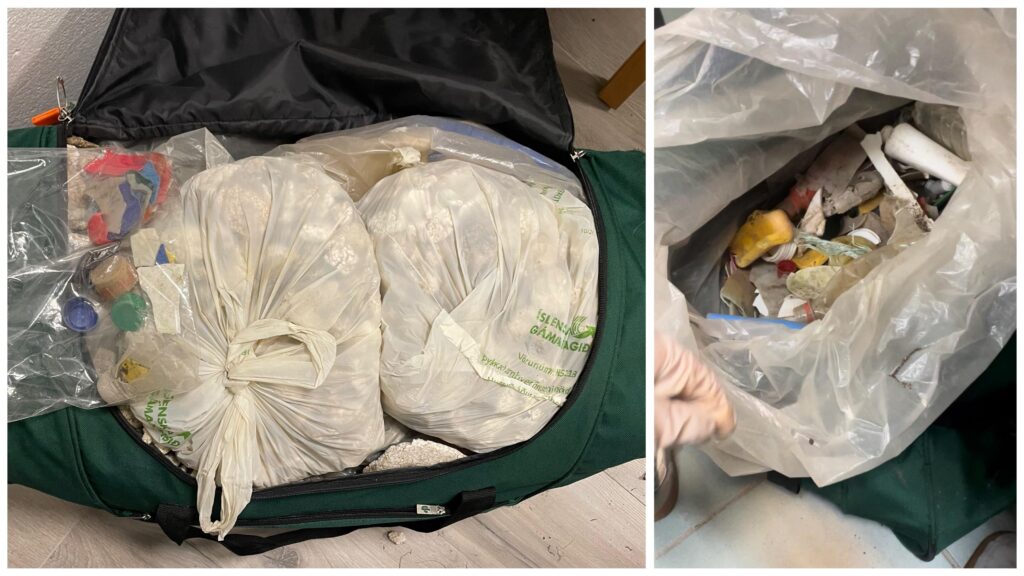
Close-up of a large plastic bag filled with weathered and colourful beach plastic debris of various shapes and sizes.
Suitcase filled with 15 kg of plastics ready to travel from Akureyri to Toulouse.

After collecting plastic debris along the beaches of Eyjafjörður near Akureyri in May, the next phase of the work has started, this time back in the lab in Toulouse, far from the Icelandic fjords. 

Returning from Iceland, I brought back a suitcase full of plastic waste collected during the community clean-ups. With limited space and strict weight limits, I couldn’t bring everything, especially not the bulkier pieces. Thus, I focused on the most weathered fragments, as they are more likely to be loaded with nanoplastics due to prolonged exposure to sun, wind and waves. 

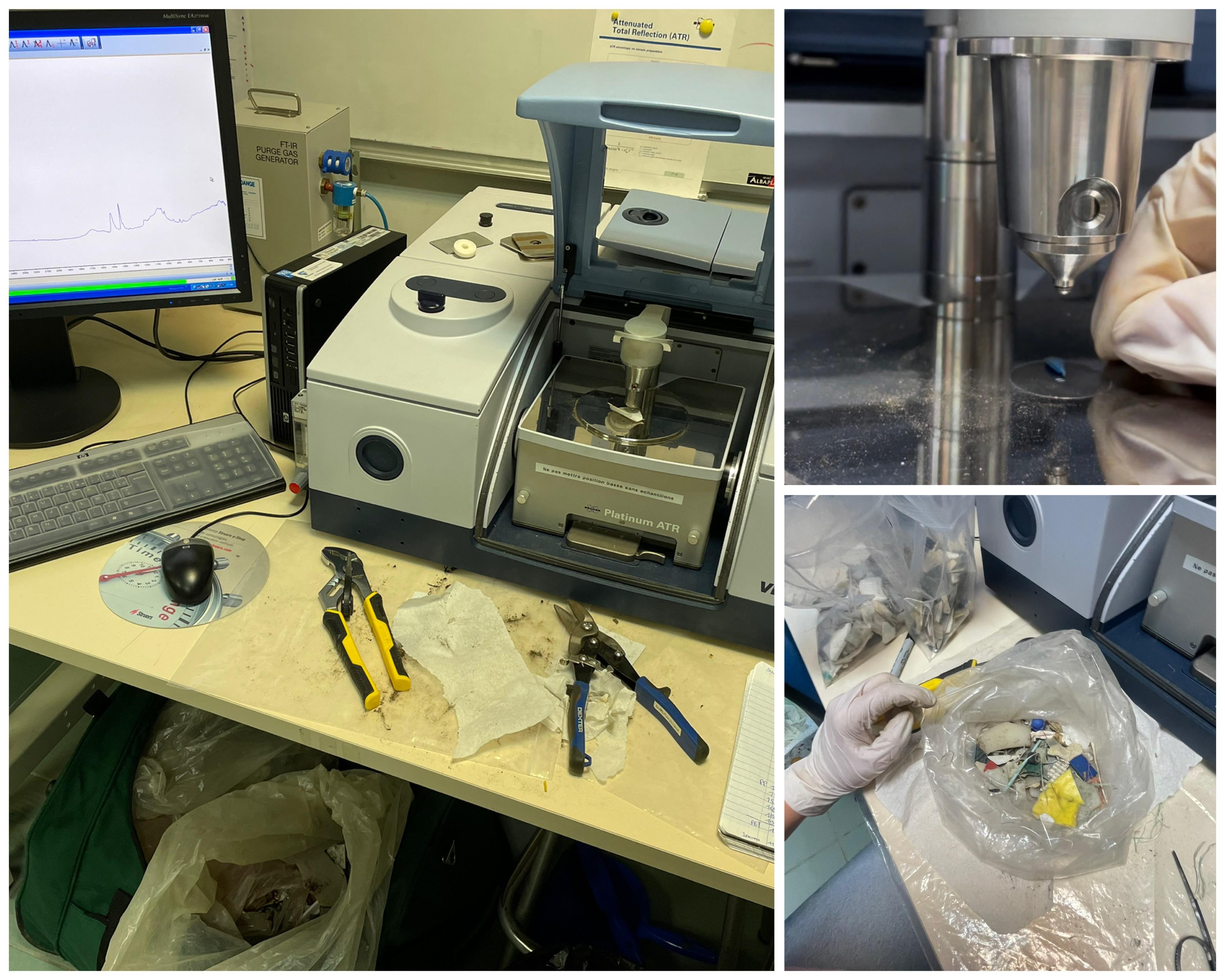
Collage showing an FTIR spectrometer workstation, close-up of the ATR measurement head, and a researcher preparing plastic fragments for polymer analysis.

FTIR spectrometer workstation used to determine the polymer type of each plastic piece.

Sorting and Identifying the Plastic

Back in Toulouse, I started by visually separating the plastic items, distinguishing polystyrene from other types. I ended up with around 1,400 hard, colourful plastic samples that now needed to be analysed piece by piece to identify their polymer type. 

FTIR spectroscopy was used at the Laplace Laboratory (CNRS, Toulouse), one of our academic partners at the Toulouse site, to detect the major polymer composing each piece. FTIR (Fourier-transform infrared spectroscopy) helps determine the chemical fingerprint of a material, in this case revealing what type of polymer each piece actually is. 

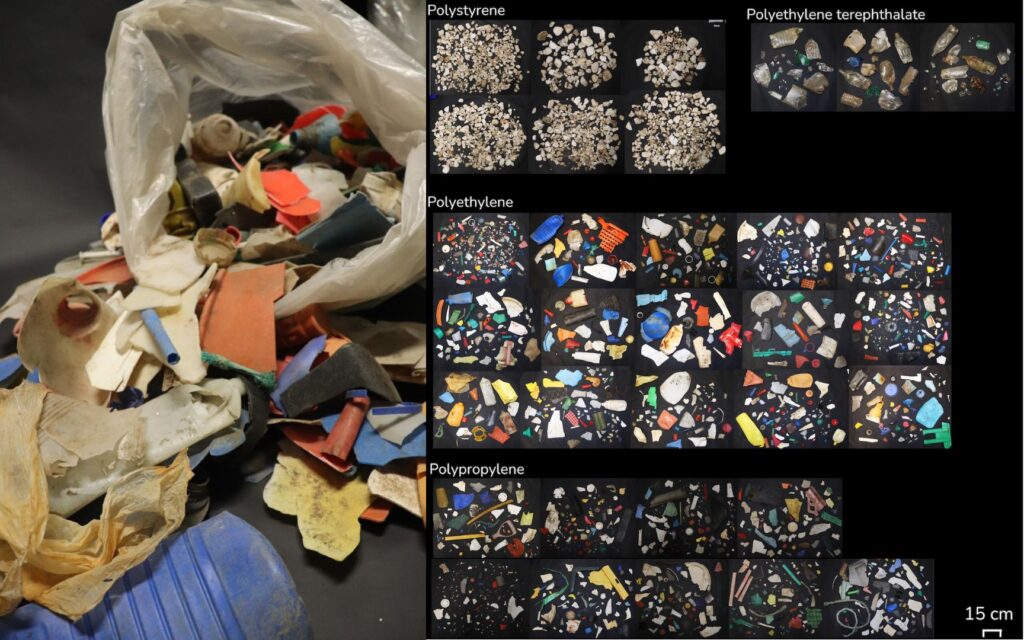
The polymers found in the plastics brought back from the Icelandic beaches are mainly polyethylene (PE), polypropylene (PP), polystyrene (PS), and some polyethylene terephthalate (PET) bottles. This is not too surprising, as these types are among the most common in marine litter due to their widespread use in packaging and fishing gear. These polymers are also less dense than seawater, meaning they tend to float and travel longer distances before washing up on shore. 

Composite image showing collected beach plastic debris and sorted fragments. On the left, a large bag of mixed, weathered plastic pieces spills onto a surface. On the right, multiple panels display the same debris separated by polymer type—polystyrene, polyethylene terephthalate (PET), polyethylene (PE), and polypropylene (PP)—each photographed against a black background with a 15 cm scale bar.
Plastic debris sorted by polymer type.

The plastic collected on these remote beaches becomes a valuable resource for research once it reaches the lab. Beyond identifying the polymers, the primary goal of this research is to synthesise environmentally relevant nanoplastics (e-NPLs) to study their impact on human health. Environmental nanoplastics are small particles, measuring at most a thousandth of a millimetre, created during the degradation of plastic litter in the environment. Research in this field is very recent, but the nanoplastics likely represent a significant part of plastic pollution. 

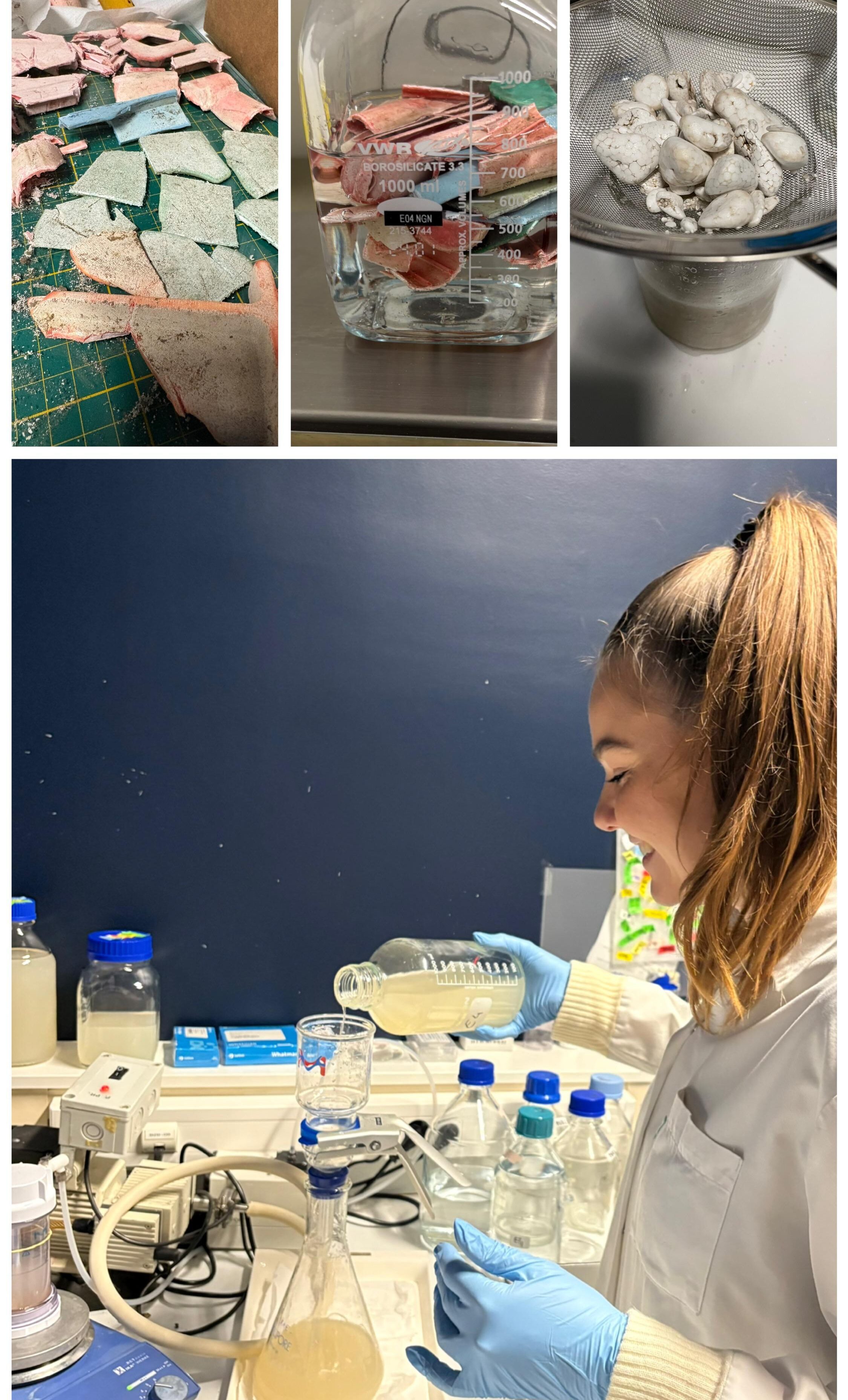
A glimpse into the top-down synthesis process, from cutting the weathered plastic pieces and preparing them for agitation to sieving out larger debris and filtering the final particle suspension in the lab.

From Beach Fragments to Nanoplastic Powders

To create these e-NPLs, I followed a protocol adapted from Blancho et al. (2021). First, the selected plastic pieces are cut into small fragments and agitated in ultrapure water for several days in glass containers. This prolonged agitation allows plastic particles to be released from the surface of the naturally weathered debris. Once the agitation phase is complete, the mixture is filtered to remove the larger plastic fragments, keeping only the water containing the smaller, suspended particles. This solution then undergoes successive filtrations using increasingly fine pore sizes to isolate the e-NPl from larger particulate plastics (microplastics). Finally, the samples are concentrated and freeze-dried to obtain the final, precious e-NPl powders. 

These powders will later be used in controlled laboratory experiments to better understand how e-NPl behave in biological systems in terms of toxicity, transport, and interaction with living organisms. 

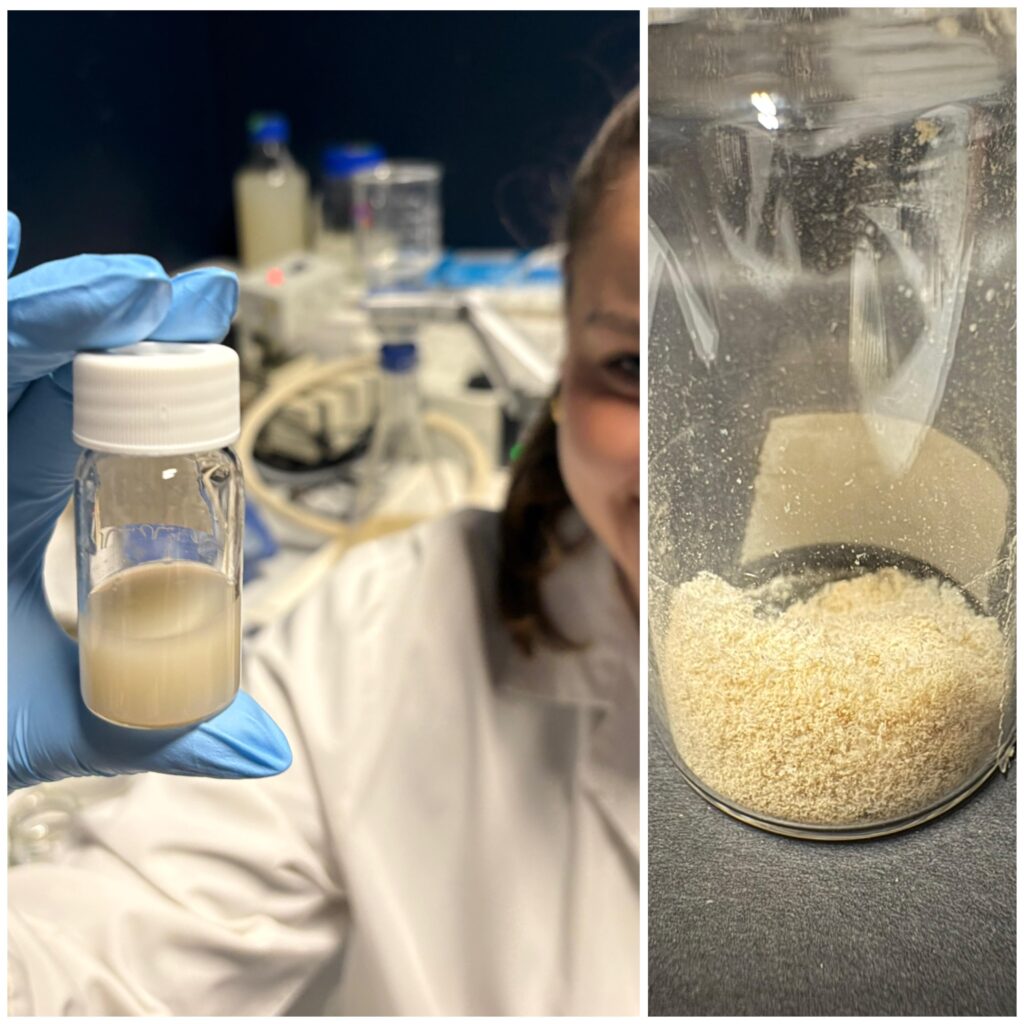
Side-by-side images showing a researcher holding a small vial of cloudy nanoplastic suspension on the left, and a close-up of freeze-dried nanoplastic powder collected at the bottom of a glass container on the right.
The final steps of the process, from the concentrated nanoplastic suspension to the freeze dried powder ready to be used in laboratory experiments.

Why environmentally relevant Nanoplastics Matter

This lab work is essential to bridge the gap between environmental pollution and laboratory science. In nanoplastics research, different strategies are used to produce model particles. Most studies use what is known as a bottom-up approach, where nanoplastics are created through the polymerisation of monomers. These particles are typically uniform, spherical, and chemically pure. However, they do not resemble the complex, irregular, and weathered particles actually found in the environment. 

In contrast, our work follows a top-down approach, where existing plastic materials are physically degraded into smaller and smaller particles. By creating e-NPls from real marinelitter, we move closer to reproducing realistic environmental conditions in toxicological studies. 

"This lab work is essential to bridge the gap between environmental pollution and laboratory science."

This approach also highlights the complexity of marine plastics. They are not simply clean polymers, but materials that have aged and interacted with their surroundings. They carry additives, absorbed contaminants, and biological residues, all of which can influence their behaviour and toxicity. Understanding this complexity is essential to grasp the true impact of plastic pollution. Using real beach plastics rather than pristine, factory-made polymers provides a far more representative picture of what is occurring in nature. 

The main challenge with this method, however, lies in producing sufficient quantities of nanoplastics for biological testing across different criteria. Despite this, the insights gained from such environmentally relevant materials are invaluable for assessing real-world impacts on health and ecosystems. 

Plastic Pollution on a Global Scale

The urgency of this work resonates beyond the laboratory. The United Nations and its Environment Programme recognise that we are facing a Triple Planetary Crisis, with irrefutable evidence for the impacts of human activities on the planet. We face the unprecedented threats of anthropogenic climate change, biodiversity loss, and pollution driven by unsustainable production and consumption of energy, chemicals, materials, products, and technologies. As stated by the Scientists’ Coalition for an Effective Plastics Treaty, plastics and associated chemicals are at the centre of this crisis. 

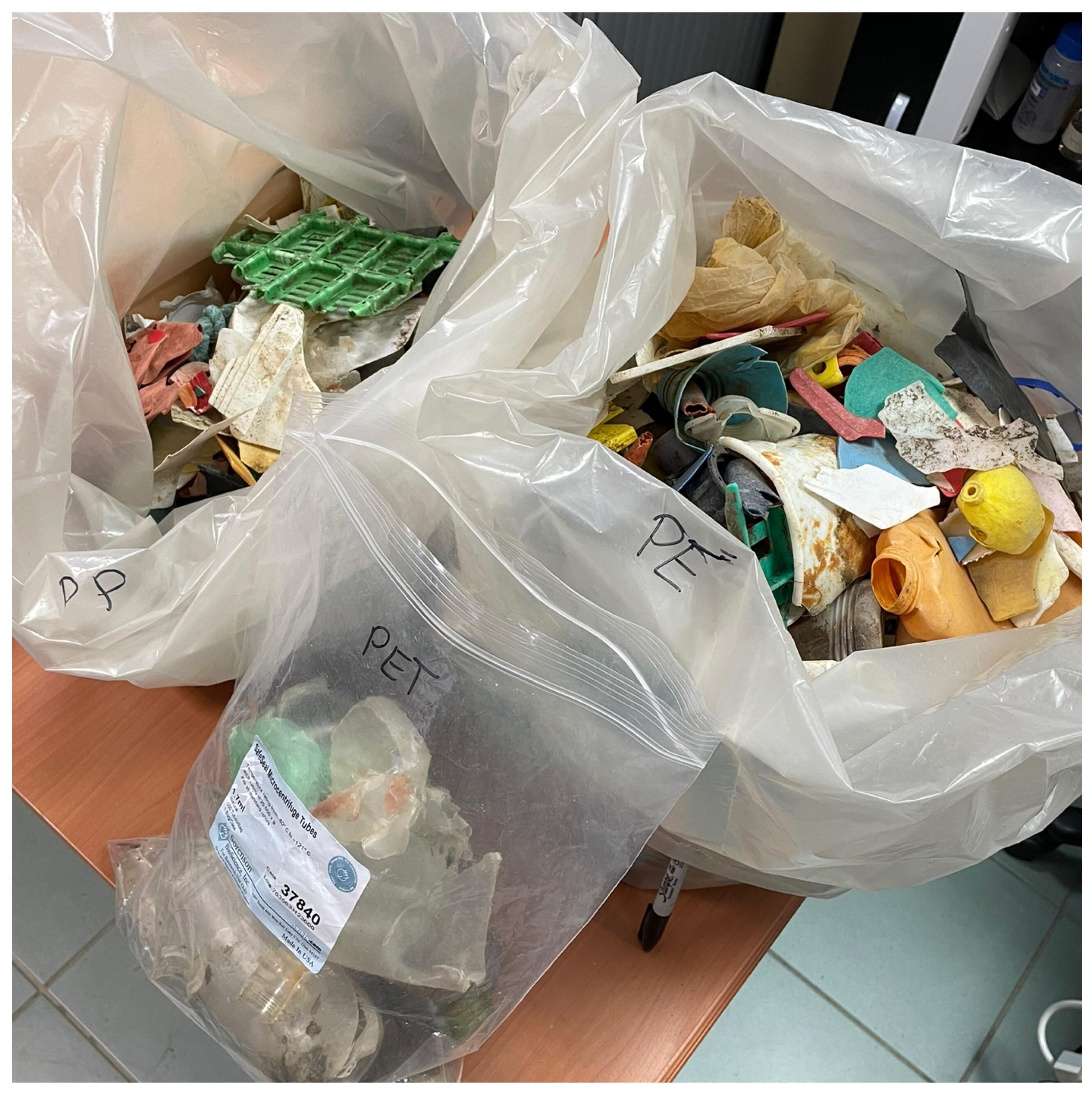
Three large labelled bags containing sorted beach plastics: PET, PE, and PP, showing various weathered fragments inside transparent liners.

The sorted beach plastics prepared for laboratory analysis reflect the types of debris found even in remote regions

Plastic pollution is recognised as a global issue, extending even to remote regions such as the Arctic. This was highlighted by Lisa Koperqualuk of the Inuit Circumpolar Council (ICC) in her declaration during the closing plenary on 1 December 2024 at the negotiating session of the International Treaty to end Plastic Pollution in Busan, South Korea. She emphasised that the Arctic is disproportionately affected by multiple pressures including climate change, pollution, and increasing human development, and is projected to become a sink for plastic waste without the capacity to manage it adequately. Her call for a strong, ambitious global treaty to tackle the root causes of plastic pollution serves as a reminder of the scale and urgency of this challenge. 

By combining community driven clean-up work with laboratory research, we can better understand the fate of plastics in the environment, how they degrade, and what hazards they may pose to human health once they transform into nanoplastics.

Text written by Melanie Mobley (TOXALIM Research Centre in Toulouse)

Photos: Melanie Mobley.

Stay tuned for more

Stay tuned on ICEBERG by subscribing to our newsletter and following us on social media:

Subscribe to our newsletter and stay updated on the progress of the project.

Subscribe

Project Scientific Coordinator

Prof. Thora Herrmann
University of Oulu
thora.herrmann@oulu.fi

Co-coordinator, Project Manager

Dr Élise Lépy
University of Oulu
elise.lepy@oulu.fi

Communications

Marika Ahonen
Kaskas
marika.ahonen@kaskas.fi

Innovative Community Engagement for Building Effective Resilience and Arctic Ocean Pollution-control Governance in the Context of Climate Change

ICEBERG has received funding from the European Union's Horizon Europe Research and innovation funding programme under grant agreement No 101135130

Privacy Policy