November 27 2026

One Health, One Arctic: Linking Animals, People and Ecosystems

In the European Arctic, the health of people, animals and ecosystems is closely linked, and pollution affects all three. The One Health approach recognises this connection and is built into the ICEBERG project. It brings together natural and social sciences, local knowledge and community-led monitoring in Northeast Iceland and beyond. For Karl Karlsson, founder of One Health Iceland, the health of people, animals and ecosystems in the Arctic can’t be separated.

As a veterinarian working in northern Iceland, people often think my work is mostly related to animal health and treating animals.

Many years ago, that was my main occupation. Before 2023, when I founded One Health Iceland, I have mostly been working within the national government and in Brussels at the EFTA Surveillance Authority, as a legal specialist and veterinary auditor.

In this type of work, in which I analyse the application and effectiveness of legislation and public policies, it is vital for stakeholders to understand the importance of a healthy environment.

As our environment acts as a foundation for public and animal health, any real long term progress and optimal use of resources demands this type of understanding.

This is exactly why I left my public career to promote the One Health transdisciplinary approach, which recognizes how closely tied domestic and wild animals, humans, and ecosystems truly are.

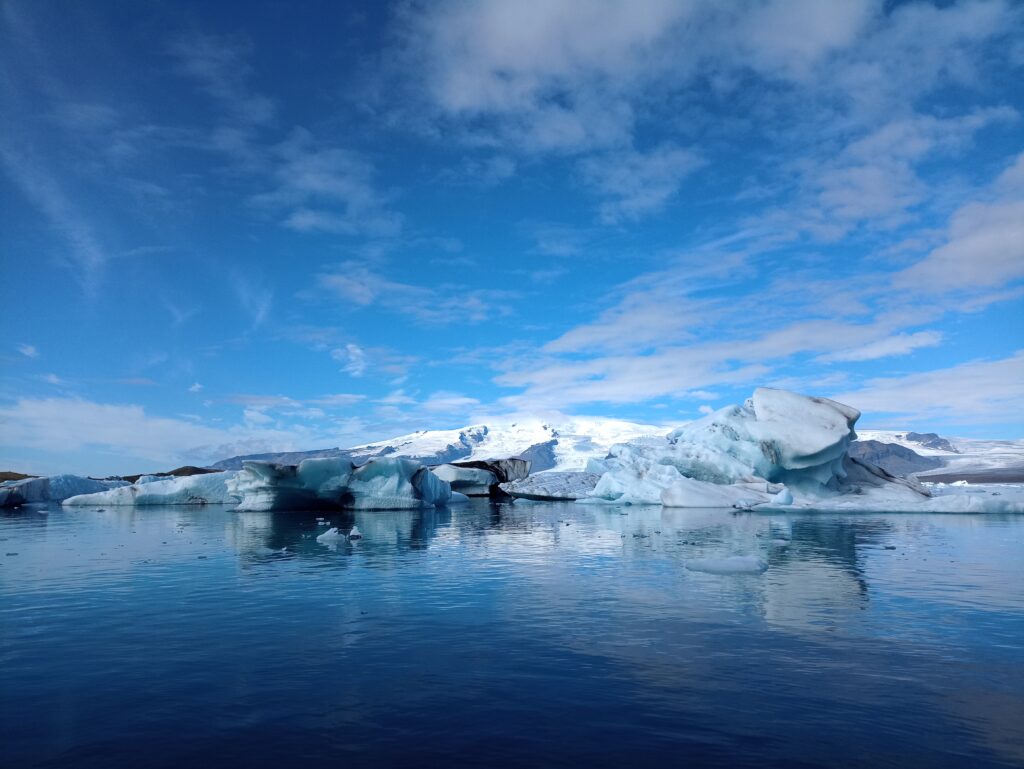
The One Health approach is an integrated element of the ICEBERG project. Photo credit: Victor Lion.

The Interconnected Arctic

The European Arctic, including the ICEBERG project case study areas in western Svalbard, South Greenland, and Northeast Iceland, is affected by global warming in many ways.

Addressing current and future challenges requires building bridges between academic and institutional silos, aligning efforts in the veterinary and public health sectors and strengthening environmental monitoring and mitigation strategies.

To protect this sensitive region, we must look at the bigger picture, and that is exactly what the ICEBERG project aims to do.

"What makes this project truly special is that it merges natural and social sciences with Indigenous and local knowledge."

A Collaborative Network

As a participant in ICEBERG, I have had various roles. As a part-time researcher at the Stefansson Arctic Institute, I’ve been privileged to work with Jón Haukur Ingimundarson and Joan Nymand Larsen.

To trace chemical contaminants through the food web, I have been sampling and providing various food samples for experts at Oniris, such as Gaud Dervilly and María Murcia-Morales, who deploy advanced analytical protocols to measure historical and emerging pollutants and linking consumption patterns to risks.

Christa Marandino from GEOMAR visited Akureyri last summer, and I was able to assist her in connecting her work with the local community stakeholders. We were able to ensure access to proper facilities for her work, in order to understand how ocean pollution alters microbial processes and climate-active trace gases.

I also have been involved in the work of Apostolos Papakonstantinou and Marco Lonero from SciDrones. We’ve used high-resolution drone mapping to track remote coastal litter, as well as data gathering and promoting local community involvement.

Without being able to highlight all the great people I have had the privilege to work with in the ICEBERG project, I must mention current involvement in the work led by Adam Stepién, where the goal is to bridge findings with actions and to ensure that these efforts lead to real changes.

The One Health perspective in ICEBERG

The One Health approach is an integrated element of ICEBERG. What makes this project truly special is that it merges natural and social sciences with Indigenous and local knowledge.

In addition to this, we actively involve communities through citizen science, with the aim to identify practical, community-led pollution monitoring and providing recommendations for science funders and policy makers.


Text: Karl Karlsson


Stay tuned for more

To stay tuned about ICEBERG, follow us on social media and subscribe to our newsletter to get the updates to your own email.

Get to know more ICEBERG people:

Find ICEBERG on:

Subscribe to our newsletter and stay updated on the progress of the project.

Subscribe

Project Scientific Coordinator

Prof. Thora Herrmann
University of Oulu
thora.herrmann@oulu.fi

Co-coordinator, Project Manager

Dr Élise Lépy
University of Oulu
elise.lepy@oulu.fi

Communications

Marika Ahonen
Kaskas
marika.ahonen@kaskas.fi

Innovative Community Engagement for Building Effective Resilience and Arctic Ocean Pollution-control Governance in the Context of Climate Change

ICEBERG has received funding from the European Union's Horizon Europe Research and innovation funding programme under grant agreement No 101135130

Privacy Policy Manage cookies