Sovereignty, Pollution, and a Town on Shifting Ground: ICEBERG in Longyearbyen, Svalbard
In August, ICEBERG researchers Adam Stepien from Nord University and Nadezhda Filimonova and Medy Dervovic from the University of Laplandvisited Longyearbyen in Svalbard. Their aim was to engage with locals about concerns for regulating pollution and economic activities, and to discussexpectations for the future.
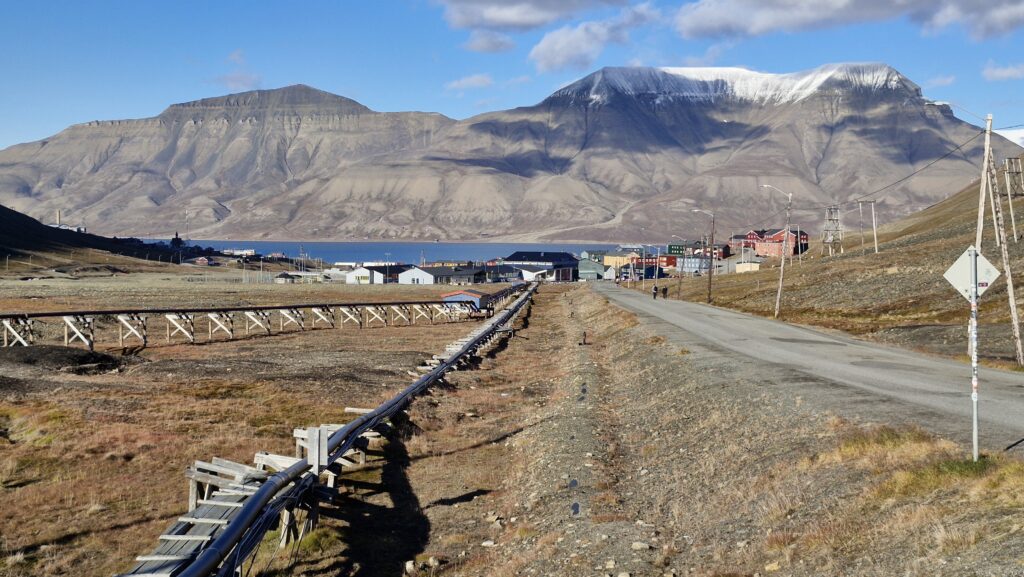
Longyearbyen as seen from Nybyen; water pipes are built on the permafrost. Photo credit: Adam Stepien.
Svalbard and its largest settlement, Longyearbyen, are among the places where the challenges Arctic regions and their inhabitants face are most visible. Svalbard is also one of the fastest warming places in the Arctic, even as the region itself is warming up to four times faster than the global average. Through atmospheric and ocean currents, including the Gulf Stream, as well as Arctic sea-ice drift, Svalbard is connected to pollution sources far beyond the archipelago, including industrial regions further south.
Governed by the 1920 Svalbard Treaty, the archipelago is Norwegian territory. However, all states that are treaty parties – effectively comprising most of the world – are allowed to engage in economic activities in the area. Additionally, their citizens can work in Svalbard without a Norwegian work permit. The Russian coal company settlement of Barentsburg and the highly multinational composition of the Longyearbyen population are consequences of this legal setting. There have been disagreements between Norway and other parties over treaty interpretations, especially regarding marine areas and the extent to which Norwegian environmental protection regulations limit other states’ economic rights. This raises Norway’s concerns about exercising its sovereignty, which, in turn, affects how Svalbard and Longyearbyen are governed.
Longyearbyen itself has also recently seen a critical shift in its identity as a settlement. For most of its century-long history, the town functioned primarily as a resource-extraction hub. Over the past decade, the remaining mines around Longyearbyen have closed, and the settlement has increasingly become a hub for tourism, research and Arctic natural science education. Its population is highly international and constantly changing, with people often staying for only a few years. On average, residents – including Norwegian officials – reside in Longyearbyen for around three and a half years.
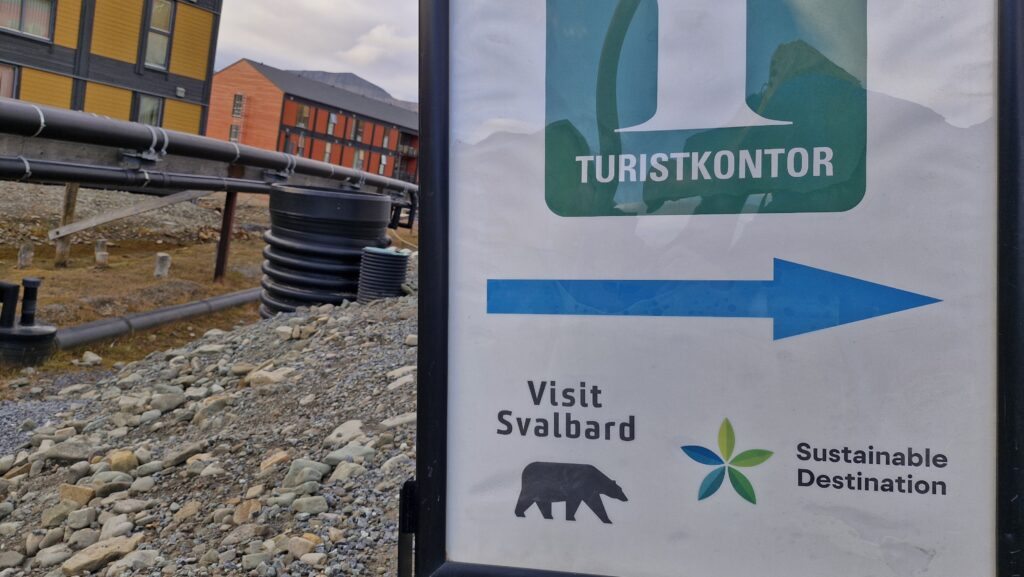
Water and tourism: key concerns in Longyearbyen. Photo credit: Adam Stepien.
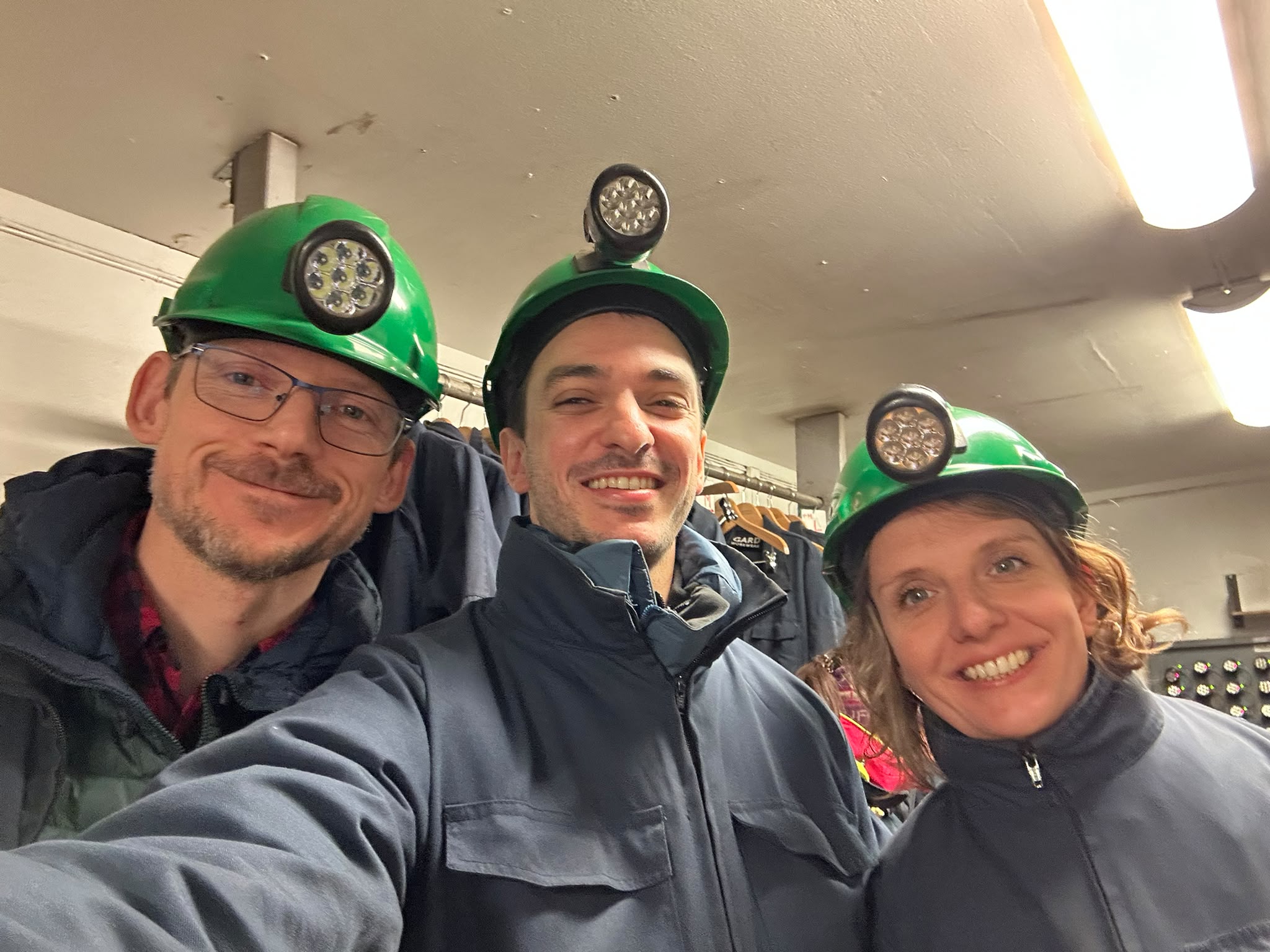
In the second half of August, ICEBERG researchers Adam Stepien, Nadezhda Filimonova and Medy Dervovic from the University of Lapland and Nord University visited Longyearbyen. As they primarily deal with questions regarding pollution governance in the project, their goal was to better understand local concerns and perceptions of policies and regulations in Svalbard. The team also held a scenario workshop to compare visions of the future across the ICEBERG study sites, with each site characterised by different environmental, social, economic, and political settings.
The visit also included the team joining our Horizon Europe sister projects ArcSolution and ILLUQ in presenting the progress and results of research conducted in Longyearbyen and Svalbard. ICEBERG’s research in Svalbard has primarily taken a natural-science approach. This work on governance and future scenarios adds an important social dimension to the environmental research being done in the project.
Threethemes stood out in the research conducted, including discussions and interviews with locals,in Longyearbyen last month.
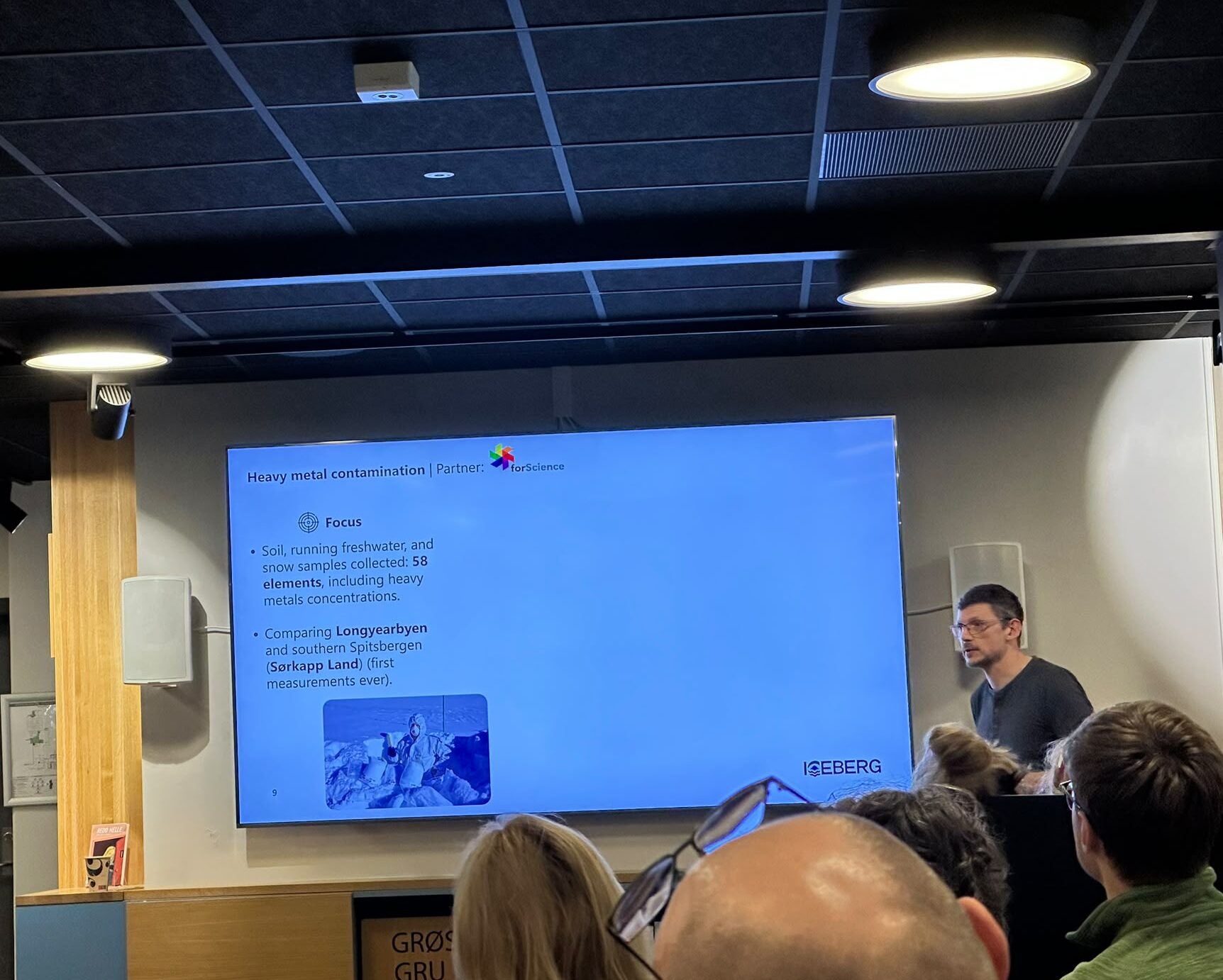
Adam presenting ICEBERG work and results relevant to Svalbard at the community meeting at the local library. Photo credit: Medy Dervovic
Changing, impermanent and contested community identity
All Arctic communities experience pressures and undergo profound transformations. Longyearbyen is a place where many drivers of the broader Arctic change are particularly vivid.
While local issues were more heavily emphasized in interviews with Longyearbyen residents, geopolitics was still heavily present in these discussions. In the current contentious geopolitical reality, Norway has become increasingly concerned about its control over Svalbard.
This has led to policies that some locals describe as intended to make Longyearbyen more clearly a Norwegian settlement, with the goal of making the local population less transient and more family-based and limiting voting rights for the local council to Norwegian citizens (and Norway mainland residents). The latter development took away the right to control the institution responsible for local schools, waste, and wastewater from those who had lived in Svalbard for decades and were previously active in local politics.
Mines in and around Longyearbyen were rarely profitable, and their continued operation required public funding. The decision to close the last mines was seen by locals as largely political, justified by the need for a green transition and a departure from coal. Many residents continue to express doubt about this reasoning, as the settlement is now powered by diesel generators. Nonetheless, the closure of the last mines has prompted a rethinking of the rationale for Longyearbyen’s existence as a community.
Due to Svalbard’s unique demography of mostly temporary inhabitants, some study participants openly questioned the settlement’s existence – at least in its current location. It was originally chosen solely because of the presence of coal deposits. Tourism, research, education, and administration have become the core of Longyearbyen’s socio-economic foundations, and some wonder whether another location would better suit these functions.
Moreover, community infrastructure in Longyearbyen relies on permafrost, and a small part of the settlement is built on an old waste site. Some of these areas face avalanche risks in winter. Together, all these different factors can create a sense of impermanence and fragility.
Brewery in Longyearbyen, equipped with a filtration system removing manganese from drinking water. Copyright: Adam Stepien
Local resilience
Yet, amid what some may deem impermanence and fragility, ICEBERG researchers found local resilience and activism. Despite the high population turnover, ICEBERG researchers noticed the presence of a strong community identity and the capacity to support one another.
The most striking example is the response to the drinking water challenges Longyearbyen has faced for almost two years. Water in the community’s pipes contains high levels of manganese, making it formally unsuitable for human consumption (the situation is dynamically changing, with e.g. aluminum traces becoming more visible1).The reasons for the increase in manganese levels are unclear, and some contamination had been present for decades, but the recent rise likely stems from the climate change-driven accelerated thaw of the permafrost on which the water sources are built. Even if some residents ignore the risks, the clean water situation adds to the perception of fragility.
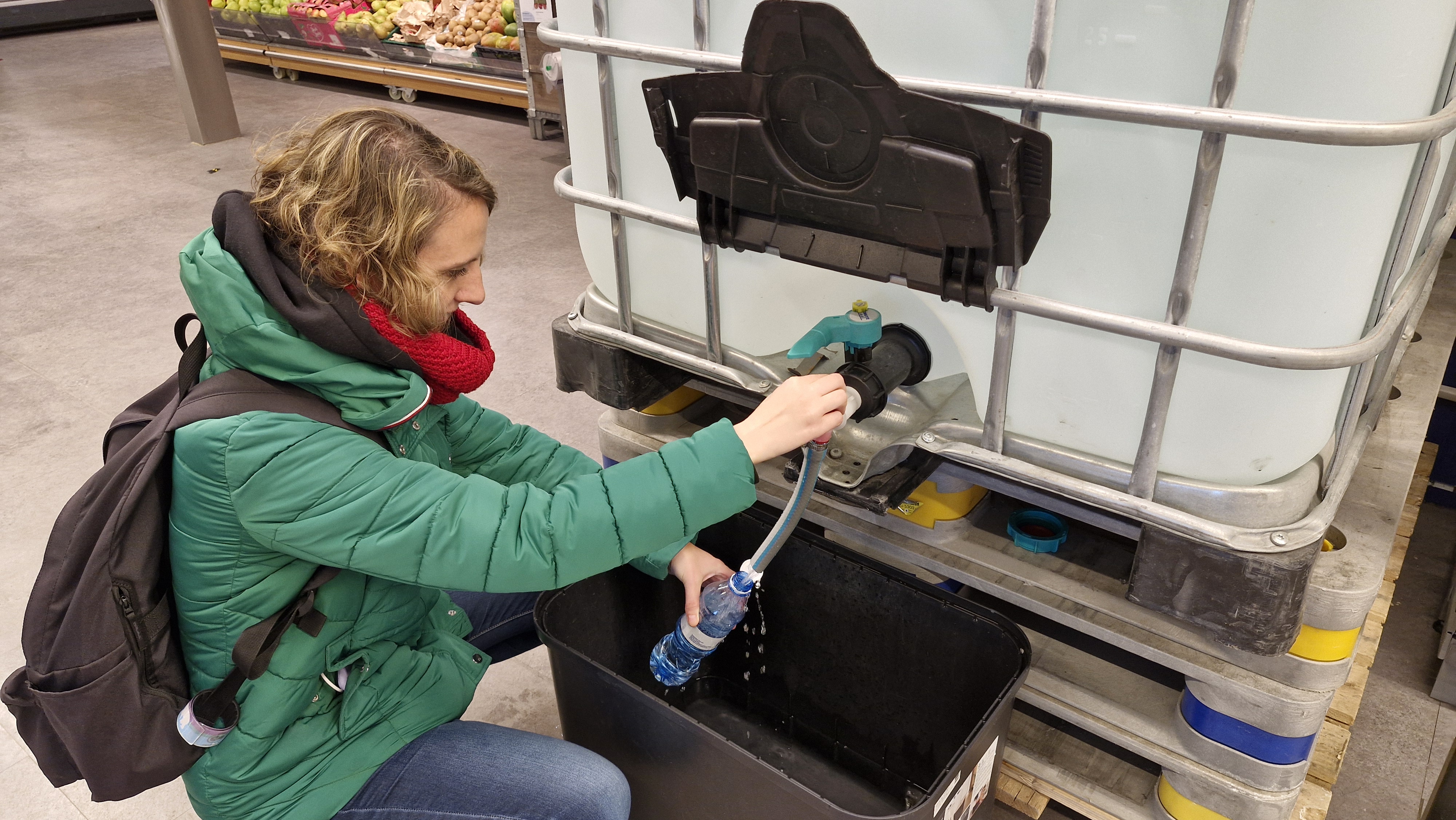
However, the response to the crisis shows a very different side of Longyearbyen. The local brewery, which already had the technological capacity to remove manganese from the water, along with other entrepreneurs, arrangedfree drinking-water containers at the local grocery store. Only later, as the situation developed, the local council(lokalstyre) provided support for these efforts.
Nadezhda Filimonova making use of the clean water provided by the brewery in a local store. Photo credit: Adam Stepien
The local council also invested its own resources into improving the environmental performance of Longyearbyen as a community. A basic wastewater treatment plant started to operate in 2022 (a piece of infrastructure that is still missing in many Icelandic and Greenlandic coastal communities). The council also invested in the construction of a new recycling centre (Miljøstasjon) to ease waste collection and process local waste before it is transported to mainland Norway. The latter is seen by local officials as an example of best practice that could inspire other Arctic communities, while acknowledging possible financial constraints that other communities may face.
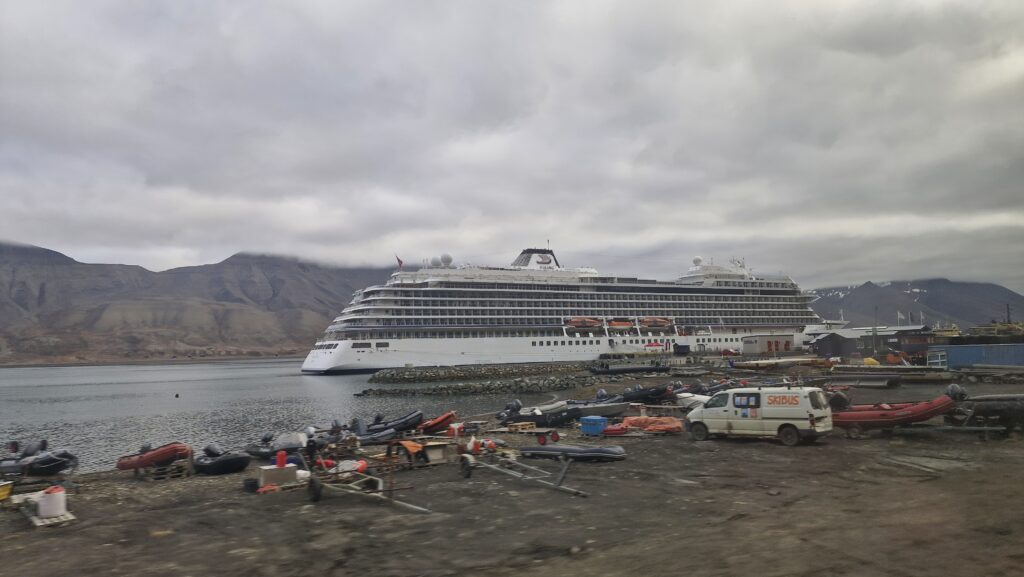
Cruise vessel calling at Longyearbyen harbour. Photo credit: Adam Stepien
Strong but continuously changing regulatory framework
Because much of Svalbard is a relatively pristine yet fragile Arctic landscape, environmental regulations are a crucial element of the archipelago’s political reality. In addition, they constitute a core element of Norway’s exercise of sovereignty over the archipelago. Few people question the need for, or the restrictive character of, environmental conservation rules.
However, some interviewees raised questions about how new regulations were adopted, insufficient engagement with the local population and businesses, and the pace of legislative change. This particularly concerns recent changes to the act governing Svalbard’s environmental protection. Some stakeholders interviewed say the consultation processes have improved recently, but the results of the change are yet to be seen.
Tourism regulations are at the core of these discussions. Over the last two decades, many locations around the circumpolar Arctic have experienced a rapid rise in tourism and the emergence of mass tourism. Responses to this expansion vary widely, from embracing unbridled tourism-driven economic growth to introducing different limitations.
Longyearbyen is one example where political decisions have set a clear cap on tourism expansion, including cruise tourism. The town reached a maximum allowed number of accommodation beds; thus, tourism can expand only by extending the tourism season or increasing the value generated by each visitor. The goal is ultimately to create year-round employment for locals involved in tourism, but this is hindered by the lack of housing. There is also a willingness to shield locals from the onslaught of mass tourism, for instance, when the town is visited by large cruise vessels.
While other ICEBERG study sites are grappling with the prospect of expanding raw material extraction, Svalbard is facing the opposite: the decommissioning of its mines. This raises questions about whether industry actually delivers on its promises to clean up mining sites once extraction ends — especially as newly developed mines are planned with ever shorter lifespans.
Decommissioning of mining sites around Longyearbyen was completed only in May 2026, with Svea mine, located south of the community, presented as a particularly strong example of a fullclean-up, which concluded in 2023/2024. ICEBERG researchers are exploring which aspects of this process can be presented as best practices, potentially valuable for communities in South Greenland, where the project is active.
The future of Svalbard and Longyearbyen appears to have manypossible pathways, and ICEBERG would like to contribute,in a small way,to the decisions made at this crossroads by generating knowledge and identifying good practices that ultimately benefitdifferent stakeholders and policymakers. The team in ICEBERG’s Work Package 3 is currently working on recommendations for policymakers at different levels of governance, and the valuable results from the fieldwork in Longyearbyen will contribute directly to this process.
Stay tuned for more
To stay tuned about ICEBERG, follow us on social media and subscribe to our newsletter to get the updates to your own email.