June 29 2026

Human-seal relations in a changing Arctic environment

Across the fjords, islands and coastal communities of South Greenland, seals are deeply woven into everyday life. Through fieldwork with locals, ICEBERG researcher Luisa Lollio explores how human-seal relations reveal changing environments, shifting wildlife patterns and the lived impacts of pollution and climate change. In this blog, she shares what these relationships can teach us about environmental change in the Arctic.

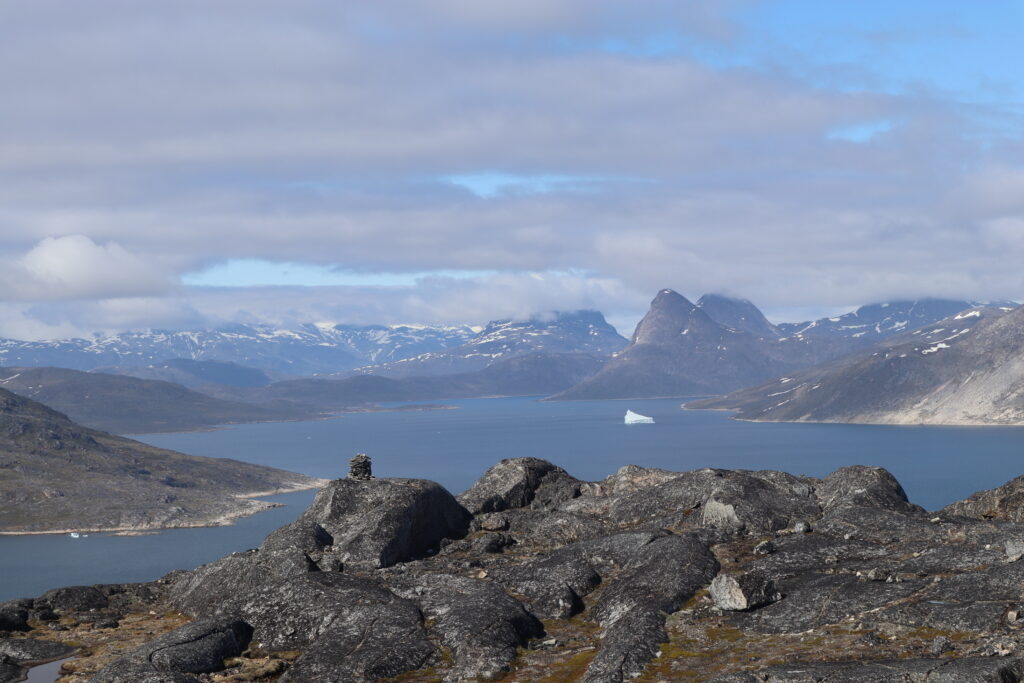
A mountain landscape, a small piece of ice can be seen in the water far away.
Luisa conducted fieldwork in South Greenland between 2024-2026. This picture is from Qaqortoq. Photo credit: Luisa Lollio.

“What do human-seal relations in South Greenland teach us about the ways people experience and cope with environmental changes and pollution?”  This is the main question of my doctoral research.

Human-seal relations refer to a broader set of interactions between people and seals. These relations include, but are not limited to, practices such as seal-hunting and processing seal products. Such activities are embedded in extensive Kalaallit Inuit knowledge systems, requiring long periods spent sailing at sea along coasts and islands, as well as detailed understanding of coastal environments, animal behaviour, and weather conditions.

During my three fieldwork stays in South Greenland, I engaged with human-seal relations through everyday life with people, learning from their knowledge, practices, memories and lived experiences connected to seals. Focusing on this topic, my aim is to understand better how the environment in South Greenland has changed through time and how these changes are perceived and experienced by people in their everyday life.

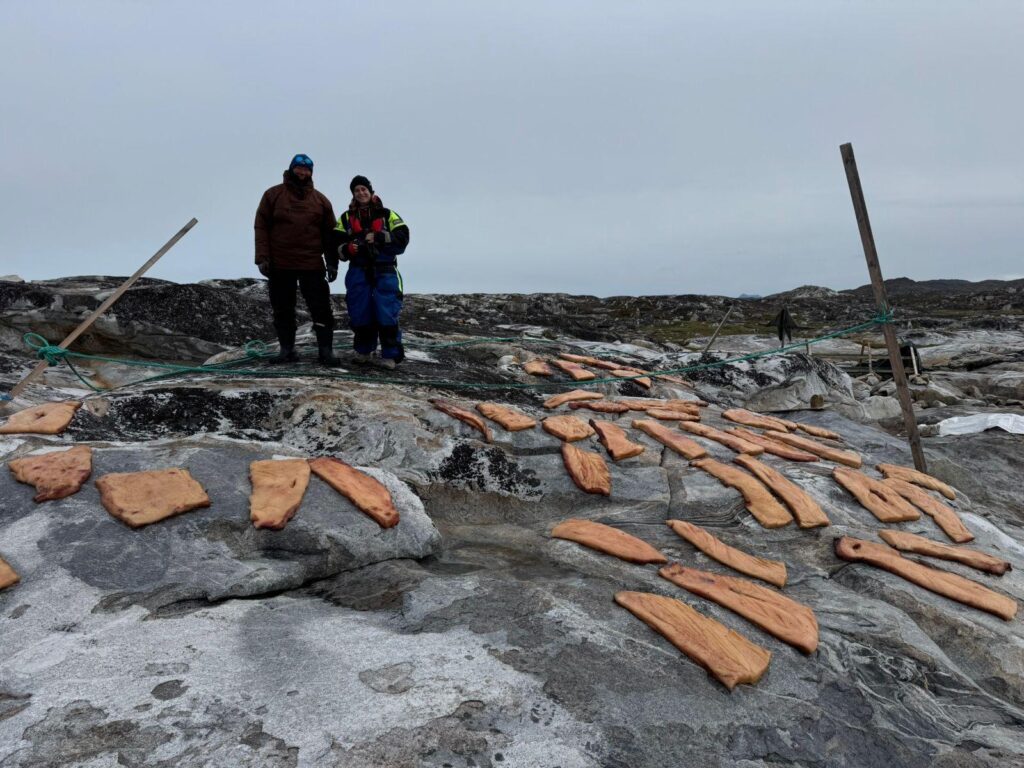
Two people standing on top of a rocky landscape. On the rocks, there are pieces of seal meat.
A local hunter introduced Luisa to the process of making oil from seal fat. Photo credit: Erik Kielsen

Collaboration with local communities in South Greenland

Qaqortoq, Narsaq and Nanortalik are the three main communities in which my research takes place, including the surrounding coast, ocean and islands. I have been on fieldwork in South Greenland three times since 2024, along with my colleagues from the ICEBERG team.

In South Greenland, seals are part of everyday coastal life and seasonal cycles, shaping practices, livelihoods, and relationships with the environment. Harp seals and ringed seals are around all year and they play an important role in the life of these communities. Hunters catch them both for selling their skins to Great Greenland, the government owned tannery located in Qaqortoq and to sell the meat to the local fish and meat market. Additionally, South Greenland is on the route of hooded seals during their spring migration, and the seasonal hooded seal hunt is an extremely important time of year.

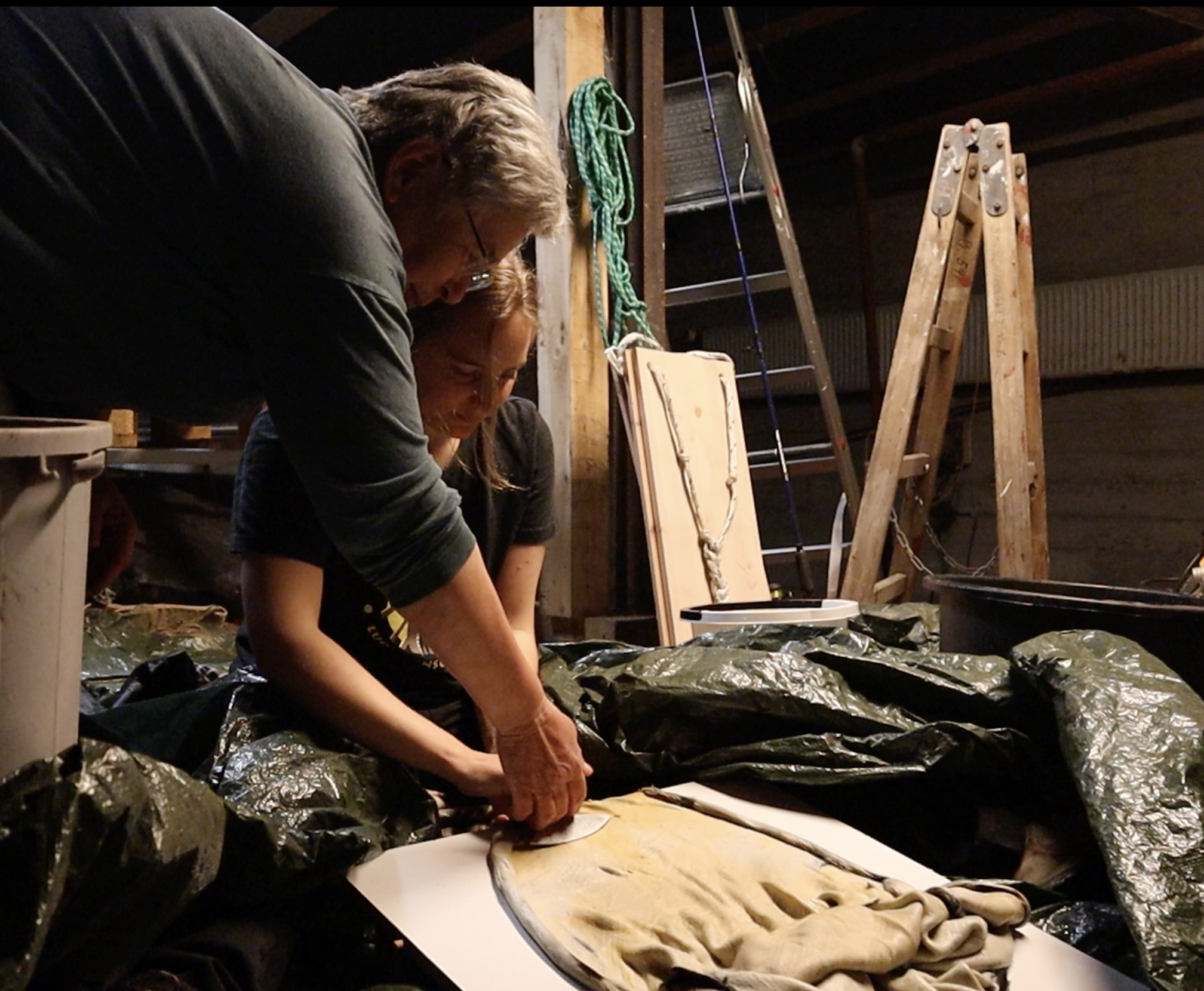
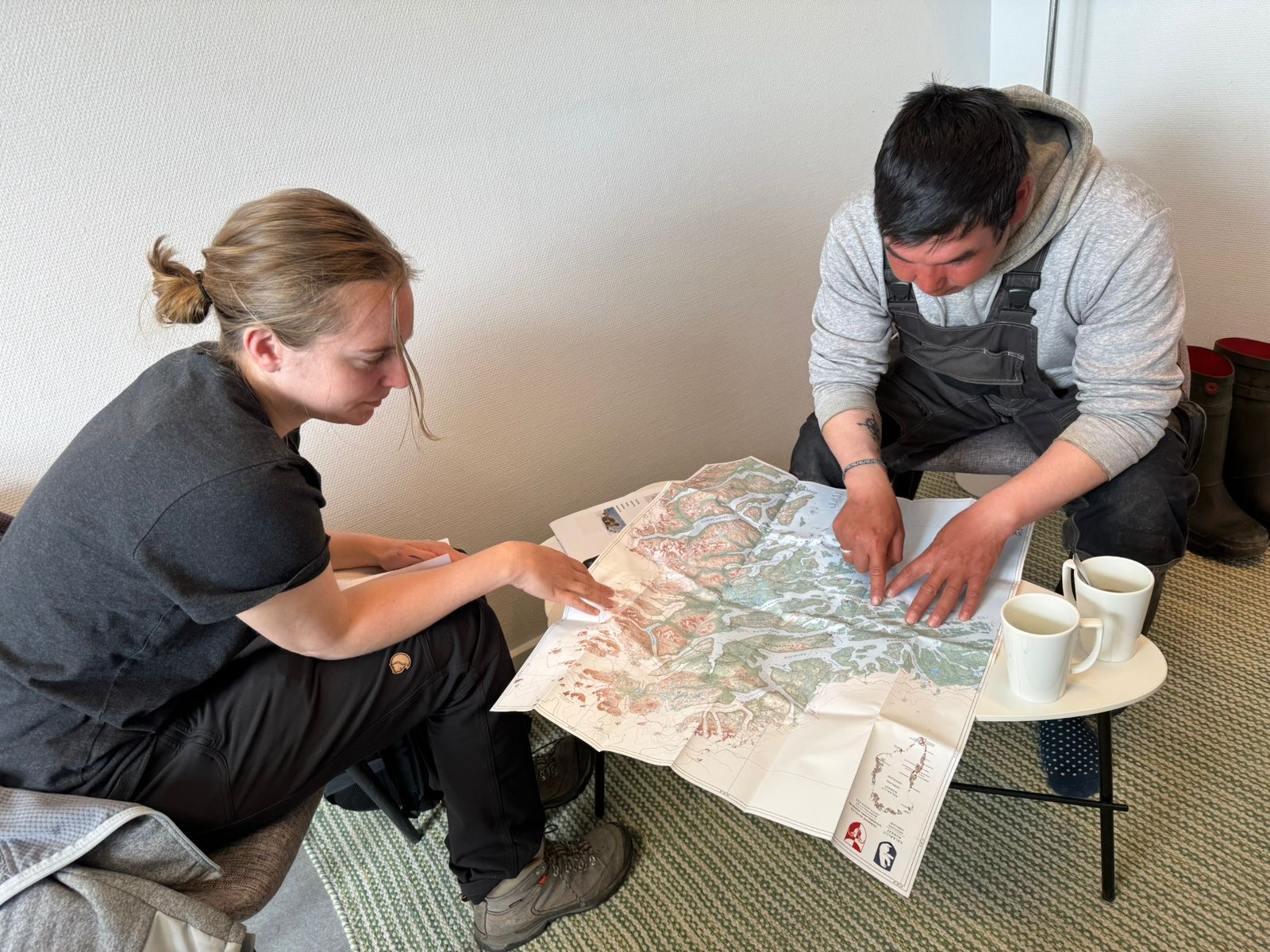
During my fieldwork I have interviewed hunters together with ICEBERG’s local collaborator Erik Kielsen and accompanied a hunter to his hut, where he processes the meat he’s caught. I also met women that prepare seal skin using the traditional tools for the making of the West Greenlandic national costume and spoke with both young and elderly community members to learn about the many ways in which seal meat is consumed.

Two people hunched over a piece of seal skin, using some type of tool on it. They are sitting in a dark, shed-type building. Two people sitting across from each other at a table, studying a map.

Why are seals important?

“It’s because of seals that there are people here” is the phrase I heard most often during my fieldwork. Seals are not only an important and nutritious food source that provides strength and warmth, but they are also a key aspect of people’s identity, wellbeing, and a way to relate to the environment.

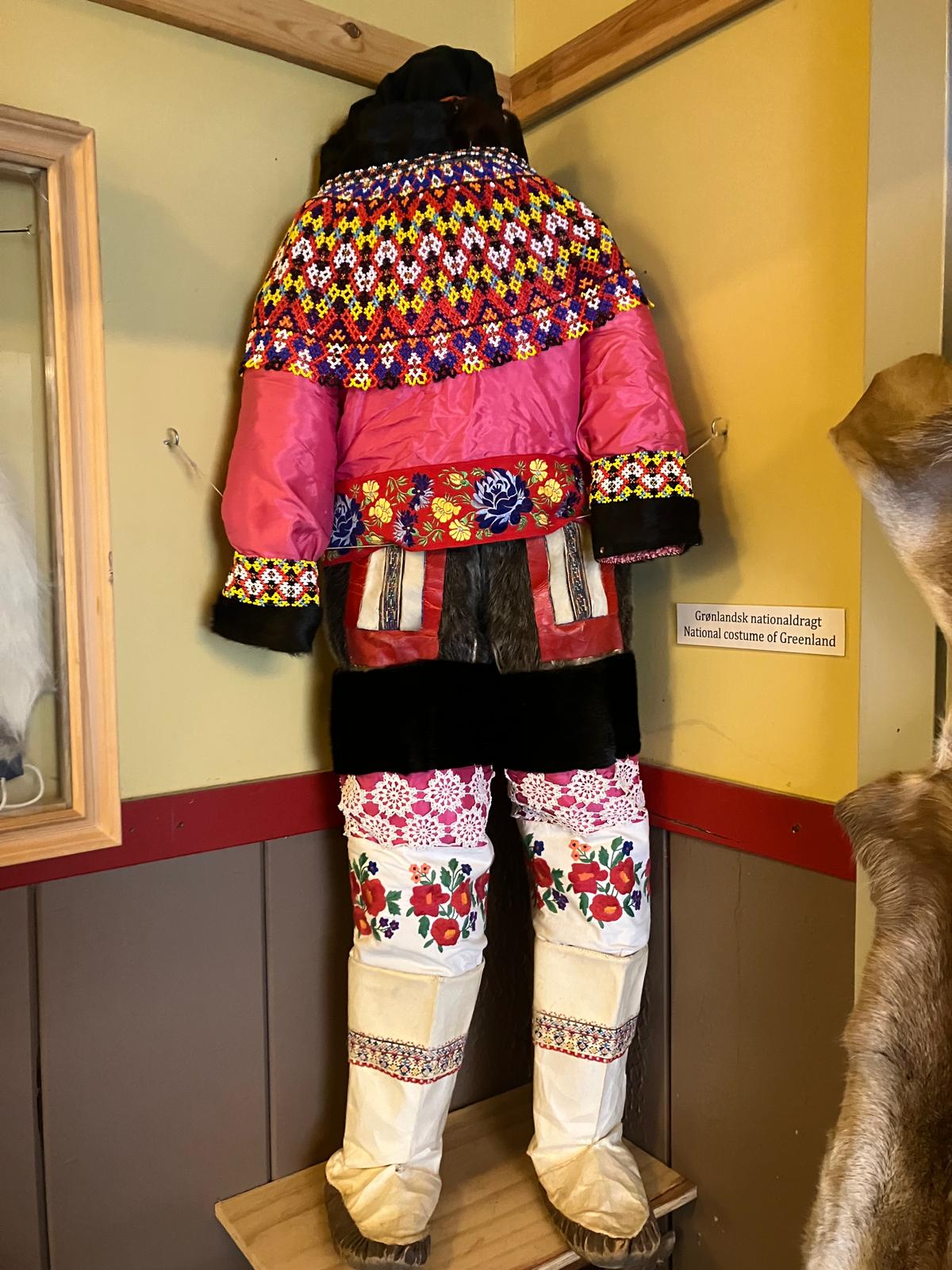
Seals are always present in people’s memories: as food shared in special occasions, as the first catch, as time spent with relatives learning hunting, and in many other ways. Seal skin is also an essential part of the Greenlandic national costume, which is worn on many important occasions like confirmations or weddings. In addition, thanks to seals, people get to spend time sailing in the ocean, fjords, and along the coast, which is extremely important for people’s wellbeing and lifestyle.

In other words, seals represent an essential aspect of people’s life stories, identity and sense of belonging to a place and to a community.

“It’s because of seals that there are people here” is the phrase I heard most often during my fieldwork.
A colorful national costume hanging from the ceiling against a yellow wall. It's mostly pink, with variations of yellow, white, green and other colors.

Western Greenlandic national costume in Narsarsuaq museum. Photo credit: Luisa Lollio.

Monitoring environmental change through seal-based knowledge

Hunters know where to find seals depending on the season, the weather, hunting areas and the seals’ biology and behaviour. Also, the processing of seal meat and blubber requires extensive knowledge of weather conditions, as well as understanding how coastal areas are exposed to wind, sun, and humidity.

Seals, as many other species, are affected by changes in the environment caused by climate change and pollution. During interviews and focus groups, people described in detail the changes in the behaviour of seals or in the morphology of seals while processing them. We also talked about changes in the environment, mapping areas in which seals aren’t present anymore, areas that are more affected by pollution or those in which ocean water, ice patterns and currents have shifted.

During these interviews, people reported how pollution, unpredictability of the weather and changes in the seals’ behaviour affect them in their daily life and activities. Talking about seals and practices related to them allowed people to express their perspective, worries and hopes about the future of these activities, and the future of their community.

Understanding changes in a holistic way

Human-seal relations are an important aspect of how people relate to the coastal environment in South Greenland. These relations emphasise the interconnectedness of people, weather, animals and the coast, and show how people’s wellbeing depends on the wellbeing of other species. To address the challenges that come from pollution and changes in the environment, it is necessary to recognise the interdependence between ecosystems and communities, and the importance of the environment and animals in people’s lives.

Stay tuned for more

Stay tuned on ICEBERG by subscribing to our newsletter and following us on social media:

LinkedIn
Facebook
Instagram

Subscribe to our newsletter and stay updated on the progress of the project.

Subscribe

Project Scientific Coordinator

Prof. Thora Herrmann
University of Oulu
thora.herrmann@oulu.fi

Co-coordinator, Project Manager

Dr Élise Lépy
University of Oulu
elise.lepy@oulu.fi

Communications

Marika Ahonen
Kaskas
marika.ahonen@kaskas.fi

Innovative Community Engagement for Building Effective Resilience and Arctic Ocean Pollution-control Governance in the Context of Climate Change

ICEBERG has received funding from the European Union's Horizon Europe Research and innovation funding programme under grant agreement No 101135130

Privacy Policy