March 18 2026

People of ICEBERG: Apostolos Papakonstantinou from SciDrones

Throughout the ICEBERG project, we will introduce the people working on the project. In this personal introduction, Apostolos Papakonstantinou from SciDrones introduces himself and shares what inspires him about ICEBERG.

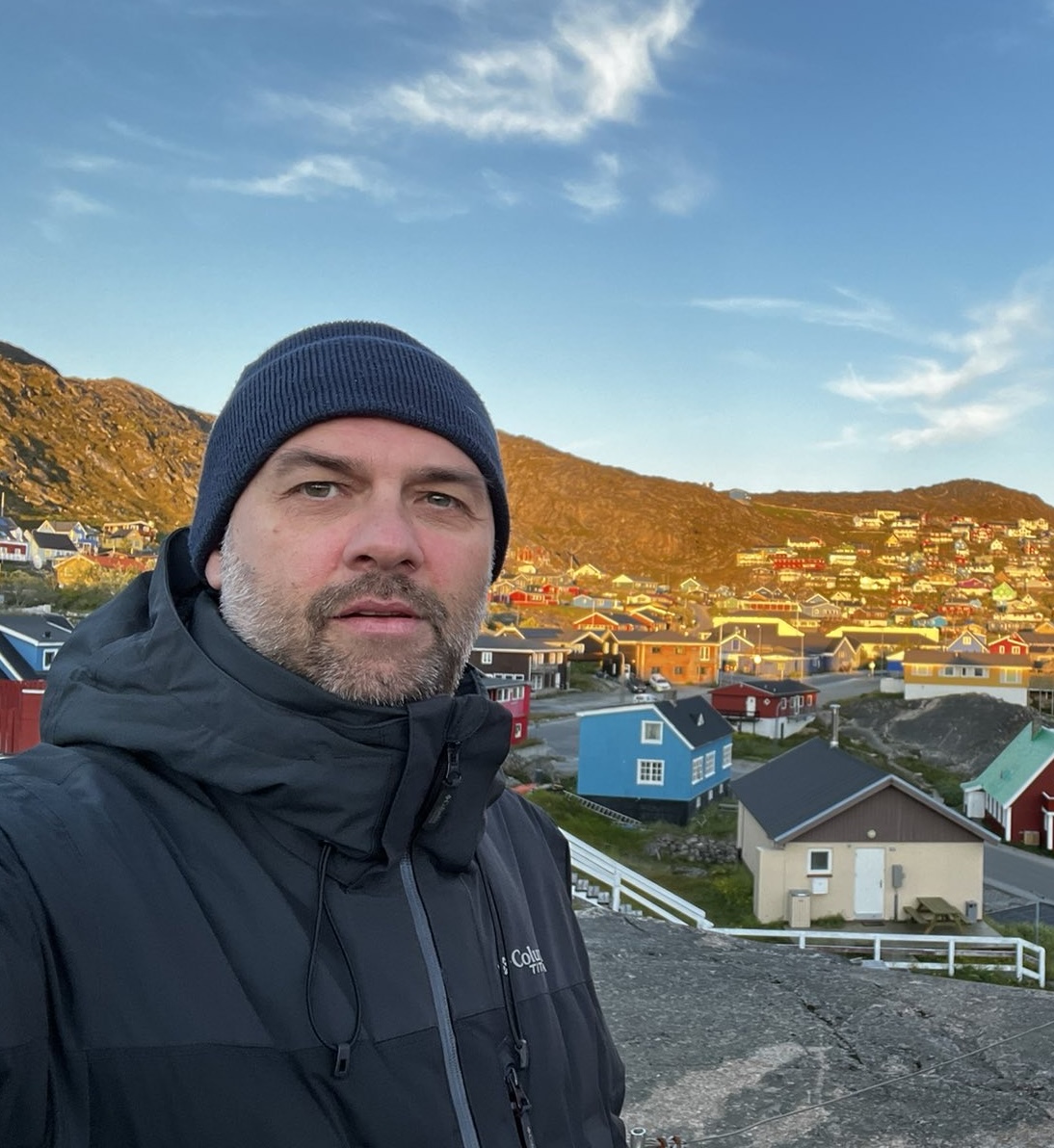
A bearded man standing in front of a landscape of colorful houses, lit up by the sun. A blue sky can also be seen.

Apostolos represents SciDrones in Work Package 2 of ICEBERG. Photo credit: Apostolos Papakonstantinou

Hi! I am Apostolos Papakonstantinou, an Assistant Professor at the Cyprus University of Technology and co-founder of SciDrones. In the ICEBERG project, I work with Work Package 2 and lead the SciDrones team in Task 2.1.1: Automated litter monitoring.

My work involves flying drones over the remote Arctic coastlines of Greenland and Iceland to capture detailed photos—so clear that we can see objects as small as a plastic bottle cap from 20 meters above. Because the Arctic is so vast, we use GeoAI (Geospatial Artificial Intelligence) to scan thousands of drone images and automatically detect and distinguish marine litter from natural rocks or seaweed. This is vital because it turns the invisible accumulation of marine litter into clear, digital maps that depict exactly where we need to take action and focus our clean-up efforts.

I have spent over 10 years using drones to study the coastal zones, but the Arctic presents a unique and “fragile” challenge. What fascinates me most is the fusion of high-tech and local hearts. We aren’t just flying autonomous robots; we are working side by side with local communities, empowering residents to participate in drone-based data collection.

There is something deeply meaningful about seeing a drone rise above a frozen beach and reveal environmental impacts that the human eye might miss. It’s technically exciting to use advanced computer algorithms to map marine litter accumulation in these arctic coastal zones, but the real reward is turning that data into a story of resilience and action for a cleaner planet.

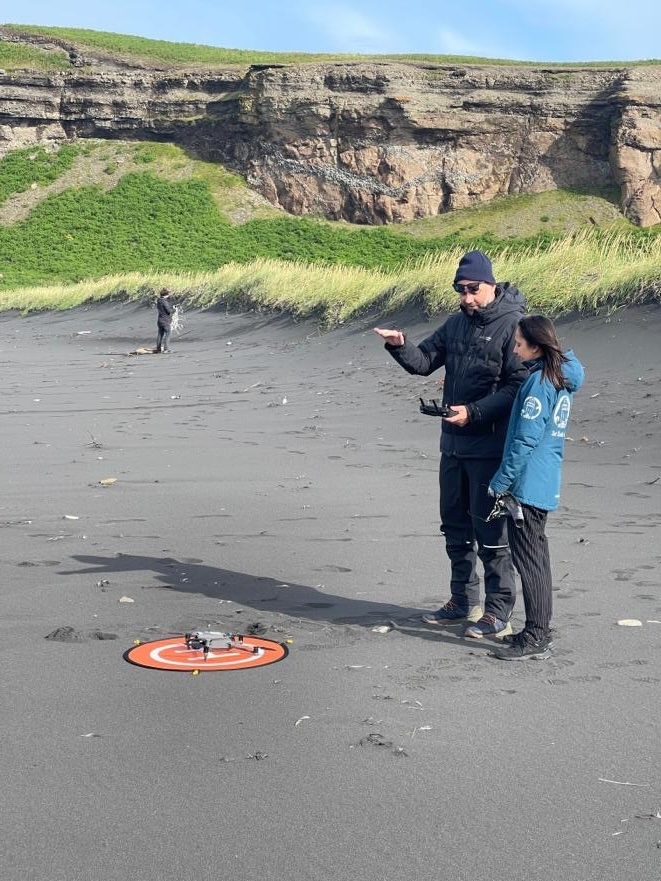
Two people dressed in outerwear standing next to a drone on the ground, presumably about to fly it. The ground is a dark grey color.

The drones are mainly used in coastal areas, as they host unique environmental challenges. Photo credit: Monika Konstantinidou

Through ICEBERG, I hope to refine our scalable methods to better understand how marine litter moves and accumulates in this harsh, remote, and isolated Arctic environment. So far, under the ICEBERG project, we have conducted drone-based surveys along the coasts of Iceland and Greenland, detecting and mapping marine litter in some of the most remote Arctic environments.

Using Scidrones CMLO (Coastal Marine Litter Observatory), an AI-powered WebGIS platform, volunteers conducted 62 drone flights and uploaded over 3,800 aerial images for automated litter detection and classification.

Results show plastic and processed wood as the dominant litter types, mainly linked to fishing and maritime activity, confirming the effectiveness of AI-assisted monitoring in extreme Arctic environments.The ICEBERG project demonstrates how AI + volunteer drone mapping can enable scalable, transparent monitoring of remote marine ecosystems.

"We aren't just flying autonomous robots; we are working side by side with local communities, empowering residents to participate in drone-based data collection."
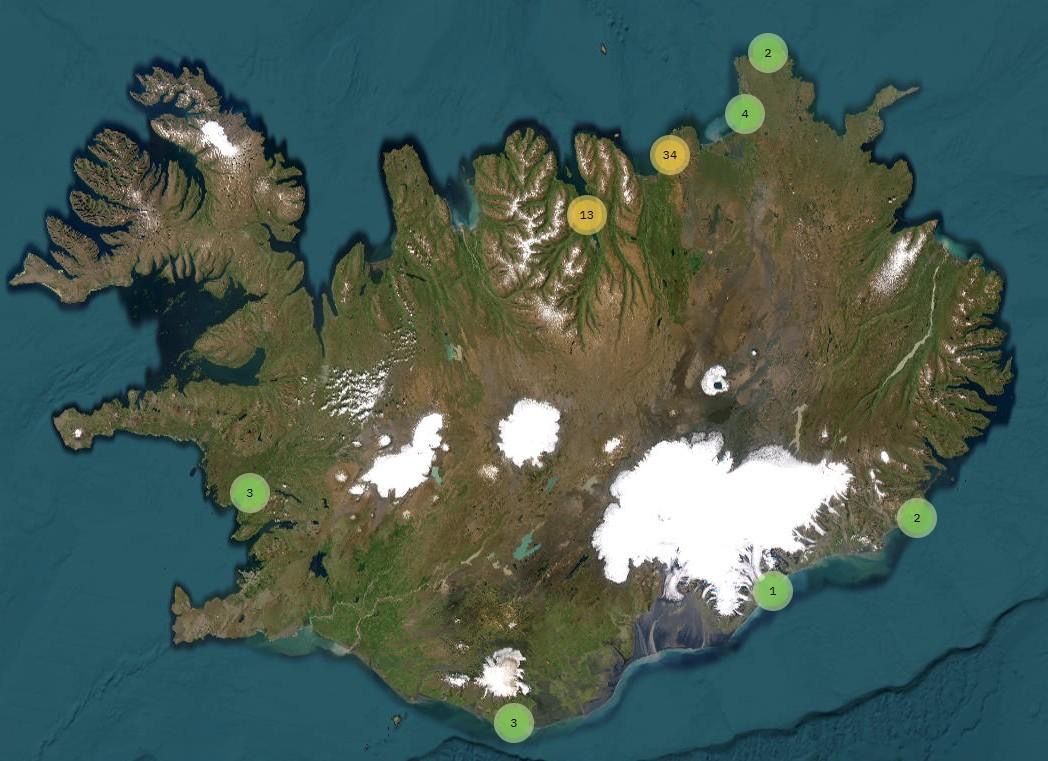
An aerial photo of Iceland. There are yellow and green circles on the eight coastal areas.

Study areas for the use of drones on the coasts of Iceland. Photo credit: Apostolos Papakonstantinou

Results show plastic and processed wood as the dominant litter types, mainly linked to fishing and maritime activity, confirming the effectiveness of AI-assisted monitoring in extreme Arctic environments.The ICEBERG project demonstrates how AI + volunteer drone mapping can enable scalable, transparent monitoring of remote marine ecosystems.
Under the ICEBERG project, I want to continue learning from the local knowledge of the people living in places like Qaqortoq and Husavik. by combining their history with our aerial technology, I hope to create a permanent database that can act as a starting point for future researchers and policymakers to track whether waste management strategies are actually working. I’m eager to see how much more our AI can learn to distinguish between the subtle colors of Arctic nature and the shockingly evident presence of human litter.

Read more about the role of SciDrones in ICEBERG and what they bring to the project in this article that Apostolos wrote in May 2025!

Stay tuned for more

To stay tuned on ICEBERG, follow us on social media and subscribe to our newsletter to get the updates to your own email.

Get to know more ICEBERG people:

Find ICEBERG on:

Subscribe to our newsletter and stay updated on the progress of the project.

Subscribe

Project Scientific Coordinator

Prof. Thora Herrmann
University of Oulu
thora.herrmann@oulu.fi

Co-coordinator, Project Manager

Dr Élise Lépy
University of Oulu
elise.lepy@oulu.fi

Communications

Marika Ahonen
Kaskas
marika.ahonen@kaskas.fi

Innovative Community Engagement for Building Effective Resilience and Arctic Ocean Pollution-control Governance in the Context of Climate Change

ICEBERG has received funding from the European Union's Horizon Europe Research and innovation funding programme under grant agreement No 101135130

Privacy Policy