March 11 2026

A Deep Dive into Citizen Science: ICEBERG at ECSA Oulu

The 6th European Citizen Science Association conference took place in Oulu, Finland from the 3–6 March 2026. ECSA 2026, hosted for the first time in the Nordics, brought together over 650 delegates including researchers, citizen science practitioners, NGOs, community members, and policymakers to advance the field. ICEBERG organized two panel sessions and a workshop on the topic of ”Blue Citizen Science”.

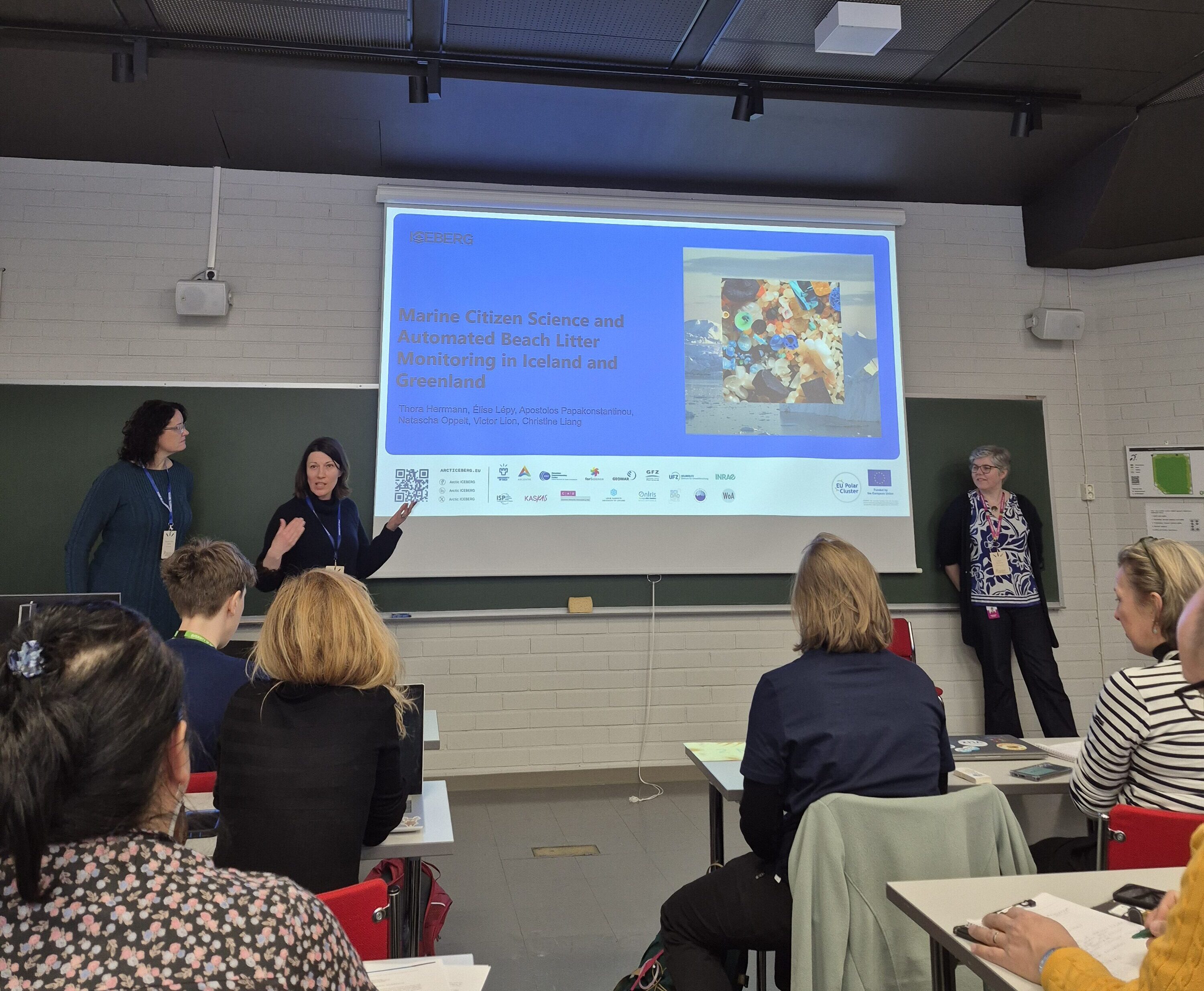
Thora Herrmann, Élise Lépy and Natascha Oppelt presenting ICEBERG's citizen science initiatives. © Photo: Anna Rönkä.

On March 5th, ICEBERG project co-leaders Thora Herrmann, Élise Lépy (University of Oulu) together with researchers from the Norwegian University of Science and Technology, Aalborg University and Aarhus University, co-hosted two sessions on “Citizen Science Pathways in Marine and Coastal Monitoring and Research: From Data to Action in Blue Participation”, attended by nearly 80 participants. Thora and Élise, along with ICEBERG consortium member Natascha Oppelt (CAU), presented ICEBERG’s citizen science initiatives focused on marine litter monitoring with the use of drones and time-lapse camera technology and AI. The talk showcased how citizens can actively contribute to mapping and tracking marine pollution, and demonstrated how AI tools help process large volumes of observations to identify patterns and hotspots, making community-driven data more actionable for research and policy.

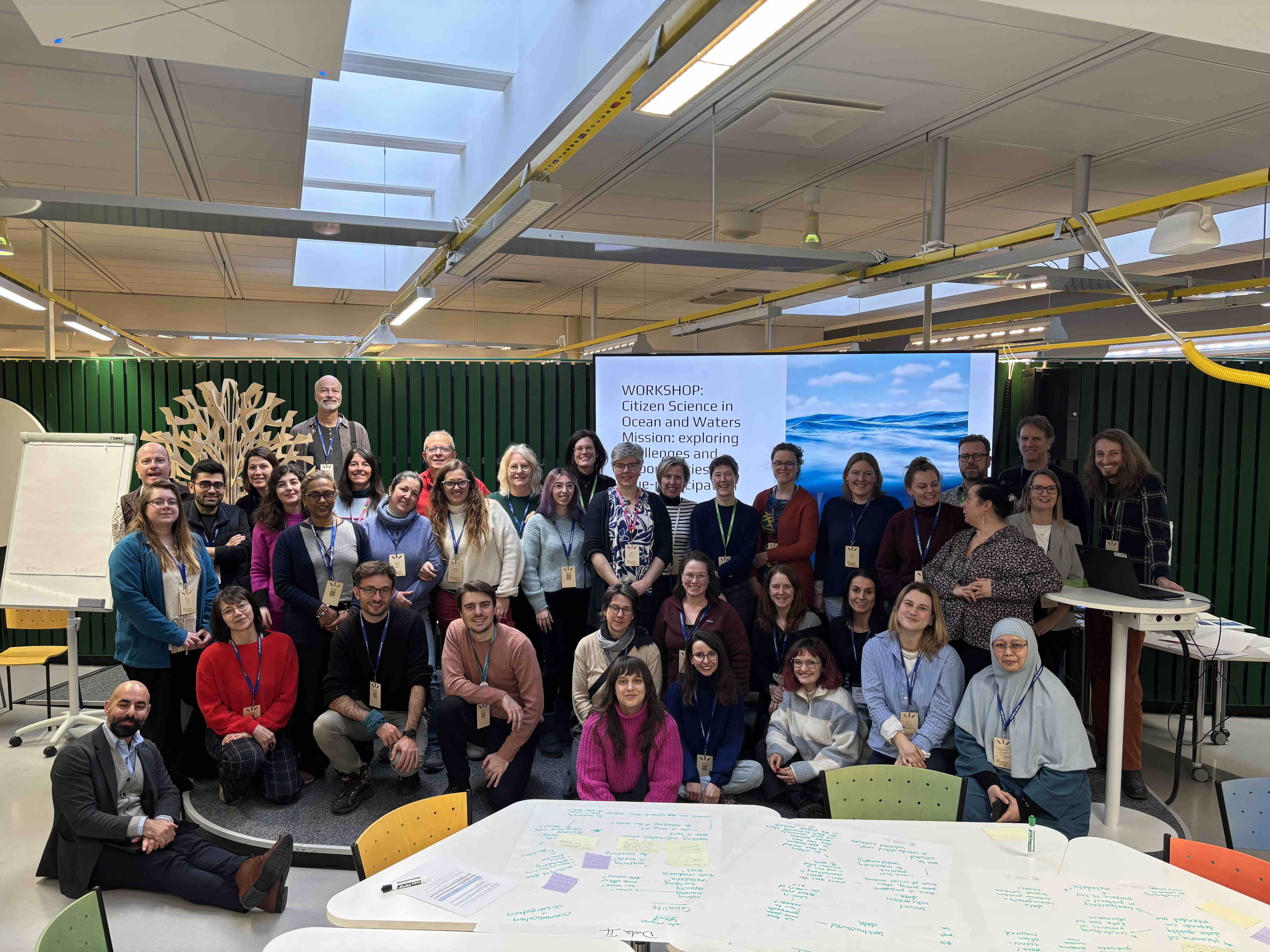
The workshops gathered delegates from all kinds of different organizations to discuss citizen science. © Photo: Thora Herrmann.

In the afternoon, a lively World Café style workshop titled “Citizen Science Pathways in Marine and Coastal Monitoring and Research: From Data to Action in Blue Participation”, was co-hosted by Thora Herrmann with researchers from the Institute of Marine Sciences (ICM-CSIC), the Flanders Marine Institute (VLIZ) and the Euro-Mediterranean Center on Climate Change (CMCC), and was jointly facilitated by Thora and Élise. Participants explored key aspects of citizen involvement in marine, costal and freshwater research through four thematic discussion tables: “Blue Data,” “Blue Tools and Technology,” “Blue Literacy,” and “Blue Engagement”. Each table provided a focused space for participants to share experiences, challenges, and innovative ideas. The Blue Data table examined methods for collecting, validating, and using citizen-generated environmental data. Blue Tools and Technology highlighted the opportunities and challenges of using digital platforms, sensors, and AI in supporting community-driven monitoring. Blue Literacy focused on improving public understanding of marine ecosystems and pollution through citizen science, while Blue Engagement explored strategies for motivating and sustaining active citizen participation.

The workshop fostered rich dialogue between researchers, practitioners, and community members, emphasizing how collaborative approaches can turn citizen science into meaningful action for freshwater, coastal and marine conservation. “This ECSA was a success for marine citizen science. From Arctic coasts to global oceans, nearly 80 participants joined our session and workshop to discuss opportunities, challenges and the future of Blue Citizen Science,” Élise Lépy highlights.

"This ECSA was a success for marine citizen science. From Arctic coasts to global oceans, nearly 80 participants joined our session and workshop to discuss opportunities, challenges and the future of Blue Citizen Science.”
A group of smiling people standing together in a colorful setting at the University of Oulu campus. Behind them is a screen showcasing the text "Citizen science in Ocean and Waters Mission".

The sessions involving ICEBERG drew quite a crowd, nearly 80 participants. © Photo: ECSA 2026

Thora Herrmann excitedly adds that ”through inspiring case studies and a vibrant World Café workshop, we saw firsthand how participatory ‘blue citizen science’ that combines local knowledge, new technologies, and collaborative monitoring not only fills crucial data gaps but also drive strengthens inclusive knowledge production, empowers stewardship, and inspires more resilient approaches to conserving our oceans, coasts and freshwaters.”

The insights gathered from these discussions underscore the importance of moving beyond data collection toward partnership with local communities. We are grateful for everyone who participated or offered insights, helping to pave the way for more equitable and impactful citizen science. See you at the next ECSA conference 2028 in Lisbon, Portugal!

Stay tuned for more

Stay tuned on ICEBERG by subscribing to our newsletter and following us on social media:

Subscribe to our newsletter and stay updated on the progress of the project.

Subscribe

Project Scientific Coordinator

Prof. Thora Herrmann
University of Oulu
thora.herrmann@oulu.fi

Co-coordinator, Project Manager

Dr Élise Lépy
University of Oulu
elise.lepy@oulu.fi

Communications

Marika Ahonen
Kaskas
marika.ahonen@kaskas.fi

Innovative Community Engagement for Building Effective Resilience and Arctic Ocean Pollution-control Governance in the Context of Climate Change

ICEBERG has received funding from the European Union's Horizon Europe Research and innovation funding programme under grant agreement No 101135130

Privacy Policy